
Guardian Solutions helps Windsor, Colorado businesses improve search visibility, website usability and the path from a visit to an inquiry. Choose ongoing SEO, a focused website improvement or a design project based on what your business needs, not a single speed score.
Discuss your Windsor SEO and website priorities. Our Colorado Springs team works remotely with Windsor businesses. Start with your website, the customers you want to reach and the services you want to grow.
SEO and website support built around your business goals
A website can be well maintained without reaching enough prospective customers. A search campaign can attract visits without giving those visitors a clear reason to contact you. Guardian brings these decisions together: what people are looking for, which pages should answer them and how the site supports the next step.
- Ongoing SEO: review technical issues, strengthen relevant service content and connect useful pages through internal links. Set priorities around the work your business wants, rather than publishing pages simply to increase their number.
- Local search: review your eligible business profile and the consistency of your real service information. A Windsor storefront and a business travelling to customers may need different service-area and contact explanations.
- Website design and improvement: make services, project examples and contact options easy to understand on a phone. Keep useful existing pages when targeted improvements can solve the problem.
- Joomla and WordPress support: investigate issues with the existing platform, including forms and performance. Hosting, maintenance and continuing SEO should have clear, separate scope.
Explore Guardian’s SEO services and website design services to compare the type of work before choosing a plan.
Know what is included and how progress will be reviewed
Before work begins, agree the pages and accounts involved, who supplies business information, which changes are included and what requires a separate proposal. Your website’s ownership, administrator access, hosting and future support should be clear. A maintenance agreement should not be mistaken for a recurring marketing campaign.
Review completed improvements alongside search visibility and useful inquiries, with the limits of the evidence stated. Rankings, traffic and revenue are different outcomes; none can be guaranteed by a website speed score. Guardian has served businesses since 2012, with people overseeing the work and decisions.
For an example of documented work, read the Add All Electric SEO case study. It concerns a Dallas–Fort Worth business, not a Windsor client or a prediction of your results. A review of your own site establishes the starting priorities.
One website example: keep the gallery and inquiry working
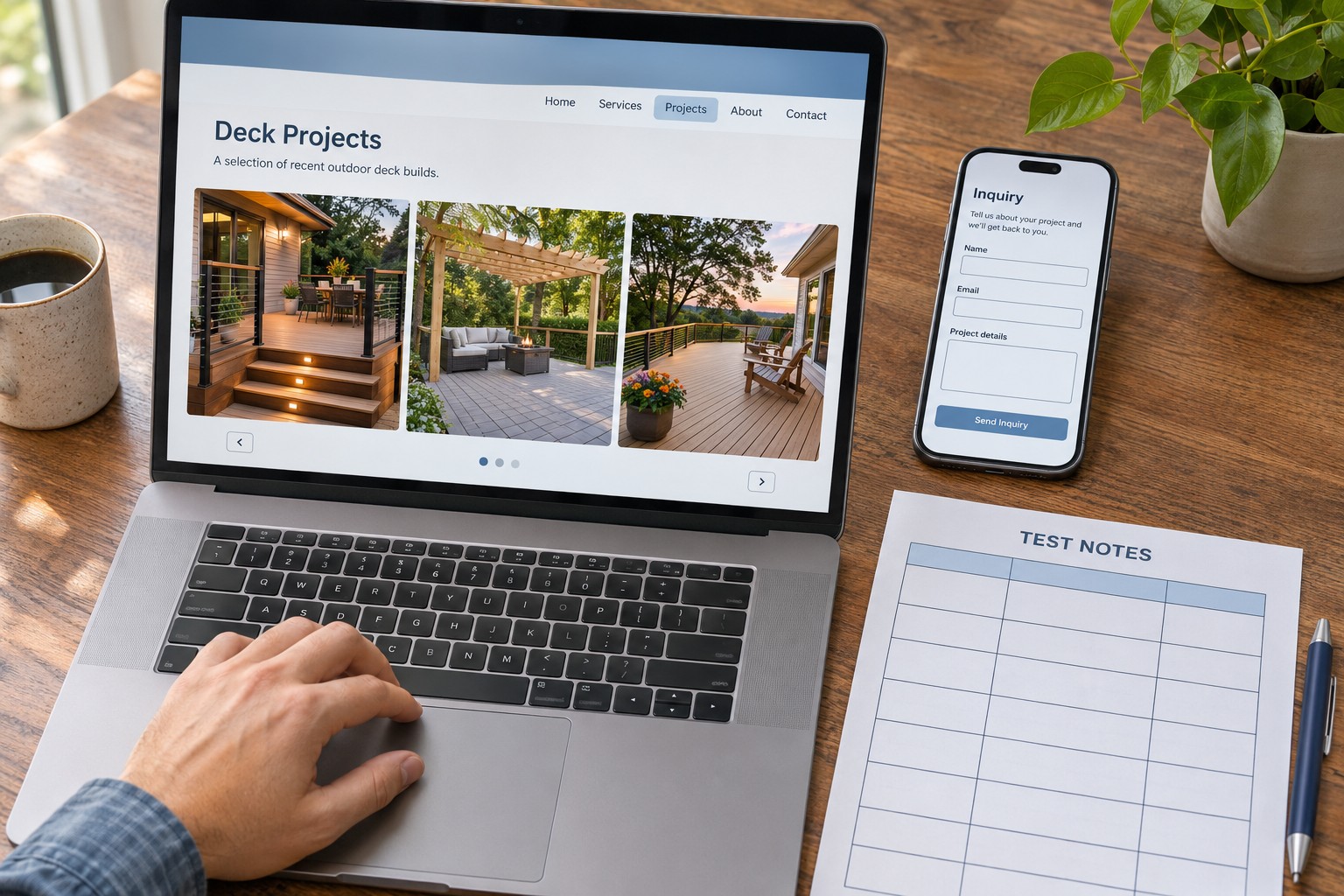
A Windsor contractor might need customers to browse project photographs and ask about a similar job. This is an illustrative use case, not a claim about a client. Large images or an embedded form may warrant performance work, but removing the photographs or form solely to improve a test score would undermine the purpose of the page.
Agree representative pages, mobile and desktop checks and the customer actions to test. Keep controlled lab measurements separate from real-user field evidence, and verify that the inquiry works after a change. The more detailed performance questions below explain how to scope this technical work. They are one part of a wider website and marketing plan, not the only service available in Windsor.
Questions about website speed targets and acceptance
Is a Lighthouse performance score a real-user Core Web Vitals result?
No. Lighthouse produces a diagnostic result from a controlled run. The field section of PageSpeed Insights uses observed Chrome user experiences. Keep the two labels on the report, even when both appear on one screen. Ask which evidence your acceptance target requires. An average of Lighthouse scores across projects says nothing definite about the pages, devices or visitors in your own project.
What conditions should accompany an LCP target in our proposal?
Name the exact URLs, site version, metric, tool, mobile or desktop context and whether the target uses lab or field evidence. For lab work, specify the device or emulation, network settings, cache state, run count and rule for summarizing runs. For field work, specify the source, page or origin scope, period and percentile. Agree the response to a missed target before work starts.
Which pages and states should we test beyond the homepage?
Choose pages with different content or functions, not simply the first few menu items. A large gallery and an embedded inquiry tool deserve their own checks. Record the first load, an image opened after a tap and the point when the inquiry tool can actually be used. Keep successful task completion separate from loading and responsiveness metrics. A good homepage result cannot complete this sample by itself.
What does an origin-level field result tell us about one page?
It summarizes observed visits across the origin rather than isolating the requested URL. PageSpeed Insights can use that broader level when page data is insufficient. Preserve the origin label and exact origin in the record. It can provide context, but should not be relabeled as a result for the gallery. If the agreement calls for page-level evidence, that item remains unresolved until suitable evidence is available.
What if our site has too little CrUX data?
Record the field result as unavailable, not zero, passed or failed. Decide in advance whether controlled tests can satisfy a separate launch milestone while field assessment remains open. Any later review needs an agreed owner, date, data source and treatment of continuing insufficiency. Do not promise a CrUX result merely because a set number of days has passed; the site still needs enough eligible observations.
Why can lab and field measurements disagree?
They observe different conditions. A controlled run tests one configuration; real visitors bring varied devices, connections, locations and behavior. Field evidence also covers a period, which may include an earlier site version. Compare the URL or origin, device category and dates before diagnosing a contradiction. Keep both reports and investigate the difference rather than discarding whichever one looks worse or averaging them into a single speed figure.
Should galleries, consent choices and inquiry scripts stay enabled during tests?
The acceptance test should include the approved content and functions customers will receive. Record the consent state and any script exclusions. If the site has meaningful before-consent and after-consent experiences, agree checks for both where applicable. Disabling a component can help isolate a cause, but label that run diagnostic. Retest the agreed customer experience before calling the work complete, especially if an outside tool becomes usable only after loading.
What should a before-and-after performance record preserve?
Keep the original report files, tested versions, exact URLs, dates, configurations, content and enabled functions. Apply the same agreed run procedure and summary rule on both sides, and disclose necessary changes. For field comparisons, retain the collection windows and device categories. A screenshot of the best new run beside an unlabeled old result is insufficient. Preserve failed functional checks too, even if the loading measure improves.
When should we consider a specific fix before replacing the platform?
When investigation identifies a bounded cause that can be corrected without losing needed functions. Ask the provider to connect the proposed change to the evidence, whether it concerns oversized images, scripts, application work or hosting. Obtain the scope and retest plan for that fix. A platform label or low headline score alone does not justify a rebuild. A replacement needs its own explanation of what the existing system cannot support.
Does meeting the target guarantee rankings or more inquiries?
No. Google uses Core Web Vitals within its ranking systems, but says good results do not guarantee top rankings. A performance acceptance result also cannot establish indexing, a completed inquiry or revenue. Keep the website test report separate from search and business reporting. With Guardian, continuing SEO and any later performance checks need an agreed scope; meeting a launch target does not create a monitoring commitment.