Practical guidance on search visibility, website performance and turning visits into enquiries. Explore the articles below for clear explanations, actionable checks and ways to improve your business website.
AI-generated illustration, not the client facility or its products.
A precast concrete manufacturer in Leesburg, Florida had a limited search footprint. Visibility was concentrated around Leesburg, branded searches and concrete steps, while the company needed to reach a broader commercial and industrial audience.
Making the product range and service market clearer
Guardian Solutions worked on product-focused and geographic content, technical improvements and search authority. The campaign aimed to connect the manufacturer's offerings with relevant commercial and industrial searches rather than depend primarily on people who already knew its name.
The first three months
First-page keyword count increased from 12 to 50 within three months.
31 keywords reached the top three positions.
The campaign record reports a 61% increase in visibility.
These measures describe search visibility. They are not figures for sales, revenue, quote requests or manufacturing orders, and this case does not supply those downstream results. The visibility percentage is reported separately from the keyword counts.
A separate 18-month expansion
Over 18 months, the campaign expanded the company's visibility into major markets in Florida, Alabama and Georgia. Examples in the campaign record include Orlando, Miami and Jacksonville. This longer geographic expansion is distinct from the three-month ranking milestone; it should not be compressed into a claim that the entire regional expansion happened in three months.
The takeaway for specialist manufacturers
A manufacturer may offer far more than its best-known product. Clear product content and relevant market coverage help explain that range. The practical question is whether a potential buyer can discover the right offering and understand its relevance, not simply whether the company appears for its own name.
For a manufacturer planning similar work, a useful review starts with the products and buyers: which offerings have clear pages, which questions a buyer needs answered, and which markets the business actually serves. Geographic content should support that buying decision rather than repeat a city name on otherwise identical pages.
Connect visibility with your next business conversation
Source: Guardian Solutions campaign case-study record supplied in June 2026. Manufacturer identity is withheld. Figures describe historical campaign results, not a guarantee of future positions or sales.
Switching SEO agencies should begin with a controlled handover of business accounts, website responsibilities, and reporting history. Confirm what you own, test the incoming team's access, and preserve useful records before the outgoing engagement ends.
Illustrative image, not the client or a project from this case study.
A Wisconsin homebuilder needed its website to do more than attract visits. Previous paid traffic had not produced the leads the business needed, and limited website content left prospective customers without enough information to take the next step.
A website and marketing campaign built around inquiries
Guardian Solutions developed service and location content, strengthened local SEO and introduced a lead-generation-focused website experience. Email nurturing and ongoing SEO supported the work after launch. The campaign connected discovery, useful information and follow-up rather than relying on a new design alone.
The reported results
2,800% increase in inquiries.
1,203% increase in website traffic.
Growth from approximately one home per year to 12 homes sold in the first year after the website and marketing launch.
A reported 12-month backlog of homebuilding work.
Keeping the timeframe and attribution clear
The first-year timeframe applies to the home-sales result. The campaign record does not provide separate measurement dates for the inquiry and traffic percentages. These are results of the combined website and marketing work, not proof that one channel alone generated every sale.
Inquiries and completed home sales are different measures. The campaign's reported sales outcome provides business context beyond a traffic chart, but it does not establish that all visitors became leads or that all inquiries became customers.
The takeaway for a considered purchase
When a decision involves a major investment, the website needs to help people understand the offer before they inquire. Service explanations and relevant location information can give visitors a clearer basis for a conversation. Follow-up then helps continue that conversation over a longer buying cycle.
For a builder reviewing its own website, useful questions include: can a prospective buyer understand the work offered, find information relevant to their location, and take a clear next step? Increasing traffic alone will not answer those questions. The website and the follow-up process need to work together.
Source: Guardian Solutions campaign case-study record supplied in June 2026. The client is described anonymously. These historical results describe a combined campaign and are not a forecast or guarantee for another builder.
A drop in Google Maps visibility can come from a profile problem, a change in the searches being measured, or a wider website and customer-journey issue. Identify which signal changed before editing your business details or buying a new SEO package.
Illustrative image, not the client or a project from this case study.
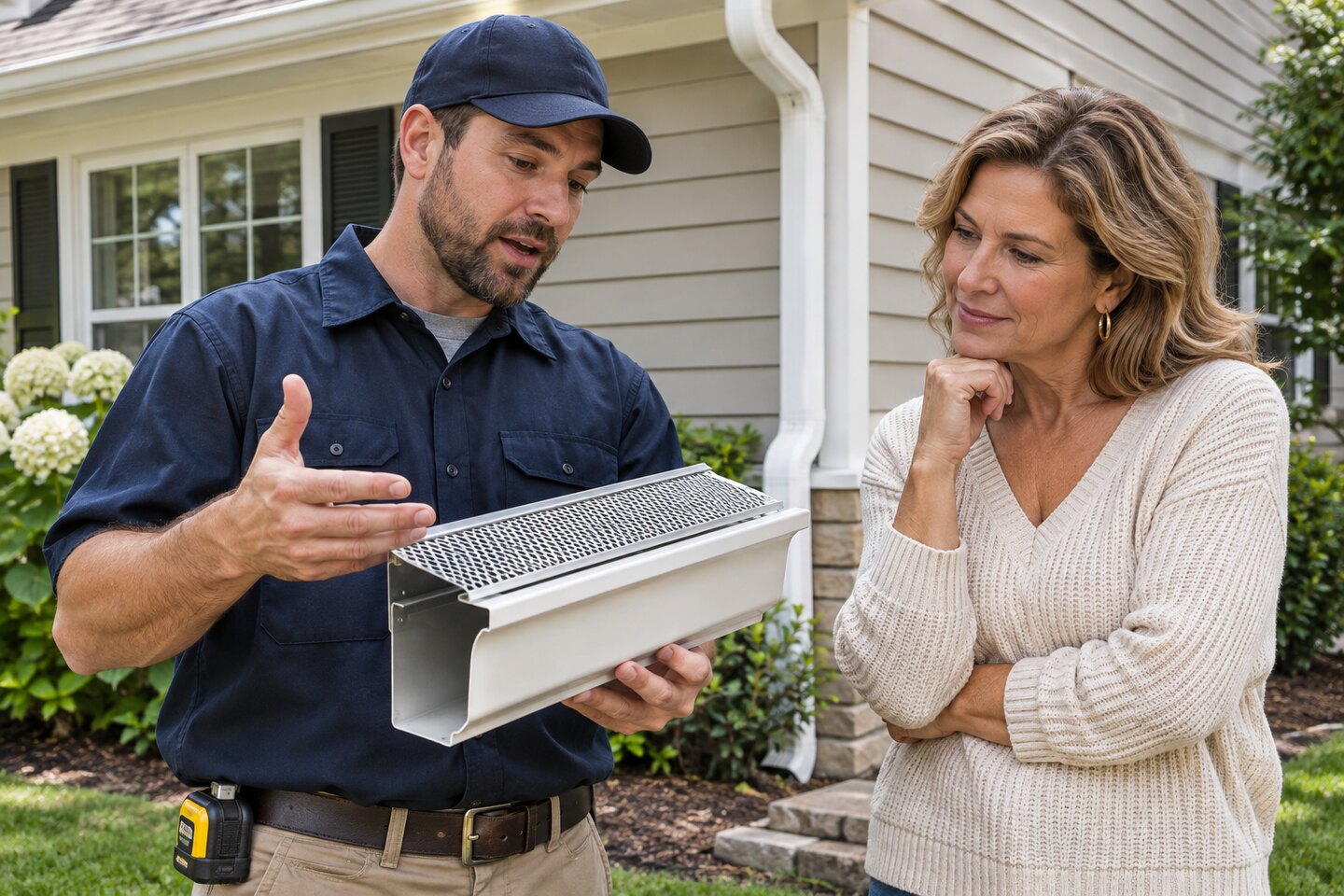
A Denver gutter company needed more than visibility for its name. It needed potential customers to find its services while looking for help. Guardian Solutions combined local SEO, on-page improvements and ongoing content work to strengthen that connection between a search and a service inquiry.
The work: local visibility and clearer service information
The campaign included service-page improvements, Google Business Profile work, keyword-focused content and technical SEO. The aim was to make the company's services easier to discover and understand, with ongoing refinement rather than treating the website as a one-time launch.
The reported results
118% increase in inquiries after a full year of SEO.
429% organic traffic growth, reported using SEMrush data.
255 ranking keywords in the campaign record; the detailed SEO case study reports 33 keywords on page one.
Approximately $1,500 per month in estimated organic traffic value.
What the numbers mean
Traffic value is a tool's estimate of the advertising value of organic visibility. It is not revenue, profit or a guaranteed advertising saving. Lead growth measures a different outcome from traffic growth: more inquiries, not automatically more closed jobs.
This was a combined campaign. The figures do not isolate one page change or one SEO tactic. SEO work began in August 2022, and the detailed case study reports the 118% inquiry increase after a full year. The supporting campaign record also reports traffic growth and total ranking keywords without specifying their measurement dates. These figures should not be treated as identical reporting snapshots or a promise of results within a particular number of months.
The practical lesson for a service business
A service page should help a homeowner recognize the service they need and understand how to contact the provider. Local visibility brings the business into consideration; clear service information supports the next step. Adding unrelated location facts would not perform either job.
For another service business, the starting point is to review three connections: whether the services people search for have useful pages, whether local business information is consistent, and whether a visitor can easily request help. Those are practical questions, not a promise that another business will reproduce this client's percentages.
Source: Guardian Solutions campaign case-study record supplied in June 2026. Client identity is withheld. Results describe a historical combined campaign; outcomes vary by business, market and starting point.
An AI search visibility audit should give a small business inspectable evidence, clear limitations, and a prioritized improvement plan. Ask for specific page findings, dated answer samples, accurate business-fact checks, and a way to evaluate the work after it is implemented.
Add All Electric’s first-year website and SEO campaign connected service-focused content, local search improvements and ongoing optimization with a 307% increase in website inquiries, 604% growth in organic traffic and more than $100,000 in new business.
More website inquiries can still mean fewer suitable jobs. Before buying more traffic or rewriting the whole site, check which requests are arriving, what visitors expected, and where the path from search to a real conversation breaks down.
The first 90 days of an ongoing SEO engagement should give you a clear view of the work being done, the problems it addresses and the evidence behind the next decision. Use that period to establish a starting point, complete agreed improvements and check whether your website is helping the right customers take the next step.
A useful monthly SEO service should turn the initial audit into completed improvements, check whether those changes work as intended, and use the evidence to choose the next priorities. The fee should buy a clear cycle of implementation and review, with responsibilities you can understand.
Two service pages appearing for similar searches do not automatically mean they are harming each other. Before merging pages, compare the customer intent, actual offers, search evidence, and inquiries each page supports. Consolidation should solve a demonstrated problem without removing useful information or breaking existing routes.
An SEO presentation is most valuable when it helps resolve a real uncertainty about the website. Before attending a session or watching a tutorial, write down the decision you need to make. A specific question gives the learning a purpose and makes it easier to judge the next action.
Before buying more website traffic, check whether a suitable customer can complete your inquiry form and reach the right person. A form audit should follow the full route from the page to the receiving team, including errors, mobile use, privacy, and measurement. A visible submit button is only the beginning.
Content reuse preferences should follow a business decision that the website team understands. Before changing crawler instructions, clarify which use is being addressed and what the business intends to permit. A technical setting is easier to maintain when its purpose and owner are documented.
If an AI answer gives the wrong hours, services, or location for your business, preserve the example and check the public facts behind it. Correct the sources you control, request supported corrections elsewhere, and retest carefully. No provider can promise that one edit will immediately change every AI answer.
Someone searching with a photograph may recognize a product or project before knowing the words to describe it. That makes the information surrounding an image important. When visual discovery data is available, use it to review whether the destination explains what the person has found.
A move or rebrand can leave customers following old directions, calling the wrong number, or wondering whether they found the same business. Plan the change around the customer journey, then verify the public result. Updating your logo or one listing is only part of the work.
An outside contributor can add useful knowledge when the material serves the publication’s audience. Before accepting a partnership, clarify why the content belongs on the website and who is responsible for its accuracy. The value should be visible in the article itself, beyond the reputation of the host domain.
A business can appear prominently near its office and be much harder to find across town. Before buying more local SEO work, separate the areas you can serve profitably from the areas where Google currently shows your profile. The useful goal is a realistic plan for qualified local demand, supported by evidence.
A customer may meet the business through a video, a social post, or the website. Reviewing those channels together can reveal a more useful story than treating every account as an isolated publishing target. Keep the identity and purpose consistent while respecting what each report actually measures.
If inquiries fall after a website redesign, first test whether customers can still contact you and whether reporting still counts the same actions. Then investigate traffic, changed URLs, and service-page content before deciding that the entire redesign needs to be reversed.
Seeing your business in an AI answer can be encouraging, but it does not show that a suitable customer reached your website or contacted your team. When mentions increase without useful inquiries, inspect the route from the answer to the service page and the contact process before paying for more visibility alone.
If ChatGPT does not mention your business, that alone does not prove it cannot access your website. Start by separating search discovery, a requested page visit, and model-training preferences, then inspect the public pages and access controls that matter to your goal.
A new label for search optimization does not make every proposed tactic useful. Before buying another AI visibility service or rewriting a website, ask what concrete weakness the work will address. A clear business purpose makes it easier to distinguish worthwhile improvements from a fashionable sales pitch.
Before redesigning a Joomla or WordPress website, identify the pages, URLs, content, and inquiry routes your business relies on. A launch plan should preserve what is useful, map necessary changes, and verify the public site before the project is considered complete.
Visitors expect the browser’s Back button to take them to the page they just left. A marketing tactic that interferes with that expectation can undermine confidence in the whole business. Review the actual journey through the website, including behavior introduced by third-party components.
A form submission tells you someone took an action. To judge whether SEO attracts suitable work, you also need a consistent way to record qualification, source evidence, and what happened next. Start with a small measurement process your team can maintain before commissioning a more elaborate dashboard.
AI-generated editorial illustration for this reconstructed archive; not an original historical photograph or actual client project.
A page can look simple while carrying an unnecessarily complicated underlying document. When planning a redesign, consider how the essential information is delivered as well as how it looks. Useful content should not become an afterthought buried behind a large amount of repeated interface material.
If a customer cannot tell what your business does or how to request the right service, another blog post may not be the best next content investment. Compare the job your existing service page needs to do with the separate question a proposed article would answer, then choose work that addresses the clearest gap.
AI-generated editorial illustration for this reconstructed archive; not an original historical photograph or actual client project.
Attention is more useful when the article delivers on the reason someone opened it. A business publication can earn that attention through specific experience, local context, and a clear explanation. Start with a real reader question instead of a dramatic headline that the page cannot support.
Opening a second location requires a clear handover of business facts, profile ownership, website information, and inquiry routing. Make it easy for customers to choose the right branch without confusing the location that already serves them.
Choosing a contractor website starts with deciding who will build it, maintain it and help customers find it. This guide compares seven website providers and business platforms, rather than presenting seven finished contractor projects. Use it to compare responsibilities, ownership, inquiry handling and the work needed after launch.
AI-generated editorial illustration; not an actual client or project.
A strong online presence draws new clients and builds trust. The right website turns visitors into leads, and leads into real business.
Publisher disclosure: Guardian Solutions LLC publishes this guide and is one of the providers discussed. The order is not an independent quality ranking. Product names and advertised packages can change; confirm current inclusions, implementation responsibilities and total cost directly with each provider.
Ready to see what works? Let’s dive in and discover how these websites for contractors can boost your business this year.
Table of Contents
Looking to find the best websites for contractors? This easy-to-follow table of contents will help you explore every step to building a standout online presence.
Introduction
Why Do Contractors Need an Inspiring Website?
What Makes a Contractor Website Stand Out in 2026?
Contractor Website Providers: Compare 7 Options
How to Choose the Right Website Solution for Your Contracting Business
Summary
If you want to dive deeper into modern design ideas, check out these Web design best practices 2026. Now, let’s get started and discover how websites for contractors can drive your business forward.
Why Do Contractors Need an Inspiring Website?
Having inspiring websites for contractors is more important than ever in today’s digital world. Your website is often the first place clients see your business, and it shapes how they see you.
The Role of Websites in Modern Contractor Success
Let’s face it, most people start their search for contractors online. When someone needs work done, they grab their phone, type in what they need, and start clicking. That’s why websites for contractors are not just nice to have, they are essential.
First impressions count. In fact, 75% of users judge a company’s credibility by its website design. If your site looks outdated or is hard to use, you could lose a client before they even call.
Next, think about local SEO. If your business doesn’t show up in Google results, clients might never find you. A strong website helps you rank higher and get noticed by people in your area.
With websites for contractors, you can show off your best work, list your services, and share reviews from happy clients. A gallery of completed projects builds trust and helps clients imagine what you can do for them.
Some contractors have doubled leads after updating their websites and making contact easier. A useful redesign connects clear service information, project evidence and working inquiry paths, with qualified leads tracked separately from traffic.
Common Challenges Contractors Face Online
Now, let’s talk about the hurdles. Many websites for contractors are outdated, slow, or don’t work well on phones. This frustrates visitors and sends them to competitors.
Here are some common issues:
Old designs that look unprofessional
Websites that don’t load quickly
Poor mobile experience
Hard-to-find contact info
Lack of fresh, relevant content
Standing out in a crowded market is tough. If your website looks the same as everyone else’s, clients may not remember you. Keeping your content updated can also be a struggle, but it’s key for showing you are active and reliable.
Another challenge is low conversion rates. Sometimes, visitors drop off without ever reaching out. This could be due to confusing layouts, missing calls-to-action, or slow response times.
Finally, missed opportunities are real. I’ve seen contractors lose jobs simply because their website didn’t make a great first impression or failed to answer a client’s questions. Investing in modern, effective websites for contractors can turn these challenges into growth.
What Makes a Contractor Website Stand Out in 2026?
If you want to attract new clients, your websites for contractors must stand out in 2026. The right website can help you win trust, showcase your work, and make running your business easier.
Essential Features for Contractor Websites
What should you look for in websites for contractors? First, your site must be mobile responsive. Most clients use their phones to search for services, so your website needs to look great and work smoothly on any device.
Fast loading speeds are a must. If your site is slow, visitors will leave before they see your services. Next, clear calls-to-action help guide clients to book, call, or request a quote.
Service pages tailored to each offering make it easy for clients to find what they need. Always include real testimonials and a gallery of completed projects. These build trust and show off your skills.
Trust signals, like certifications or awards, reassure visitors you are a pro. Integrated contact forms and live chat let clients reach you anytime. AI-driven content and automation can save time, answer questions, and keep your website fresh.
Seamless booking, instant estimates, and client portals add convenience and help you stand out. These features turn your website from a simple brochure into a powerful business tool.
Trends in Contractor Website Design for 2026
Wondering what makes websites for contractors modern and effective this year? Minimalist, user-friendly layouts are leading the way. Less clutter helps clients find what they want faster.
Video backgrounds, interactive elements, and virtual consultations are growing in popularity. These features make your website more engaging and help you connect with clients.
Local SEO work should describe the services and places you genuinely serve. Create a location page when you have useful, distinct information for that area, rather than copying the same page across city names. Test keyboard access, readable contrast, form labels and mobile usability. Legal accessibility obligations depend on the business and applicable law; get qualified advice about your specific requirements.
AI-driven personalization can help visitors discover relevant content. Keep navigation clear and measure whether personalized suggestions help visitors find useful information and take the next step.
Some contractor sites are even using smart automation for booking, quotes, and follow-up messages. These trends are shaping the best websites for contractors in 2026.
A strong, modern site is no longer optional. If you want to grow, your websites for contractors must have the right features and follow the latest trends. Start with these essentials and stay ahead of your competition.
Contractor Website Providers: Compare 7 Options
Looking for the best websites for contractors to help you stand out in 2026? You are in the right place. In this section, I will walk you through seven top platforms that can transform your contractor business. Each one brings something unique to the table, whether you want strong lead generation, easy site management, or a modern design that builds trust. Let’s dive in and see which site fits your goals.
Guardian Solutions LLC
When you want a powerful online presence, Guardian Solutions LLC delivers. They specialize in custom websites for contractors, with a focus on security, SEO, and measurable results.
Pricing: Custom quotes based on your needs. They offer a free SEO audit and tailored packages.
Core Features:
Custom website design
Advanced SEO
Website security
PPC and social media marketing
Hacked site repair
Key Benefits:
Personalized strategies
Quick response
Full-service support
Focus on long-term growth
Target Audience: Small and medium-sized contractors who want to grow and protect their brand.
Pros:
One-stop agency
Expert team
Proven results
Ongoing partnership
Cons:
No public package pricing
Consultation required
Historical contractor example: In Guardian’s Add All Electric case study, owner Eric Smith reported closing $100,000 in business during the website’s first year and attributed those opportunities to the new site. This is one electrical contractor’s client-reported experience, not independently audited revenue, a typical result or a guarantee for other contractors.
Unique Selling Point: Expertise in both website security and digital marketing for contractors.
Contractor+ is perfect for contractors who want everything—website, CRM, and field management—in one place. Their websites for contractors are fast, easy to launch, and packed with business tools.
Pricing: PRO website included with Contractor+ subscription. A free app is available.
Core Features:
SEO-ready templates
AI copywriter
Service pages
Client portal
Invoicing
Key Benefits:
Quick setup
Mobile-ready
Connects with project management tools
Target Audience: Contractors looking for an all-in-one solution.
Pros:
Simple to use
Auto-SSL
Built-in blog
Strong local SEO
Cons:
Limited customization
Locked into Contractor+ system
Example: Users report more calls and bookings within weeks of launching their new site.
Unique Selling Point: Combines website, CRM, and field service tools in one platform.
Contractors Association
Contractors Association offers professional websites for contractors as part of a membership. Their focus is on credibility and sales.
Pricing: Membership-based. Website resources are included for members.
Core Features:
Professional design
Member benefits
Industry resources
Certification logos
Key Benefits:
Boosts trust
Sales-driven design
Access to best practices
Target Audience: Licensed contractors needing a professional image.
Pros:
Industry expertise
Ongoing updates
Access to resources
Cons:
Membership required
Less customization for non-members
Example: Members display certification logos, making it easier to earn client trust.
Unique Selling Point: Emphasis on sales conversion and industry authority.
Jobber
Jobber is known for streamlining business operations, but their add-on websites for contractors are also worth a look. If you want to manage jobs and your site from one place, this is a solid choice.
Pricing: Tiered monthly plans. Website features are add-ons.
Core Features:
Online booking
Quote management
Scheduling
Client communication
Key Benefits:
Simplifies workflow
Improves client experience
Automates admin tasks
Target Audience: Small to mid-sized contractors needing business management and a web presence.
Pros:
Robust features
Easy dashboard
Good integrations
Cons:
Website is not the main focus
Fewer design options
Example: Contractors save hours each week and see more online bookings.
Unique Selling Point: Business operations and website tools in one subscription.
Houzz Pro
Houzz Pro is a leader in connecting contractors with homeowners. Their websites for contractors are designed to showcase your work and attract leads from the Houzz marketplace.
Pricing: Monthly subscription. Website builder included in Pro plans.
Core Features:
Drag-and-drop builder
Lead generation
Project galleries
Client reviews
Key Benefits:
Access to Houzz’s audience
Easy portfolio management
Built-in marketing tools
Target Audience: Remodelers, designers, and specialty contractors.
Pros:
Large homeowner audience
Visual project galleries
Integrated reviews
Cons:
Platform branding
Less SEO control
Example: Contractors gain exposure to millions of potential clients searching for services.
Unique Selling Point: Direct access to a massive user base and project matching.
ServiceTitan
ServiceTitan is built for contractors ready to scale. Their websites for contractors come as part of a robust suite of business tools.
Pricing: Custom, based on the ServiceTitan suite.
Core Features:
Custom contractor websites
Online booking
Payment integration
Analytics
Key Benefits:
Enterprise-grade features
Seamless integration
Advanced reporting
Target Audience: Established contractors and growing businesses.
Pros:
High customization
Strong support
Analytics-driven
Cons:
Higher price
Best for larger operations
Example: Companies see better conversion rates and smoother communication with clients.
Unique Selling Point: End-to-end management with branded website solutions.
Squarespace
Squarespace is a favorite for contractors who want to DIY. Their websites for contractors are easy to build, look modern, and are easy to update.
Pricing: Monthly subscription. Free trial is available.
Core Features:
Modern templates
Drag-and-drop editor
Blogging
E-commerce
SEO tools
Key Benefits:
Simple for non-tech users
Beautiful designs
Scalable for growth
Target Audience: Independent contractors and small businesses.
Pros:
Affordable
Flexible
Great support
Integrations
Cons:
Fewer advanced contractor features
Less industry-specific guidance
Example: Contractors launch polished sites in hours and update their content anytime.
Unique Selling Point: User-friendly platform with professional templates and built-in marketing tools.
Quick Comparison Table
Platform
Best For
Key Features
Pricing Type
Unique Selling Point
Guardian Solutions LLC
Growth & security
Custom design, SEO, security
Custom quote
Security + marketing expertise
Contractor+
All-in-one business solution
Website, CRM, field tools
Subscription
Integrated business & website platform
Contractors Association
Industry authority
Certification, resources
Membership
Sales-driven, industry credibility
Jobber
Operations + web presence
Job mgmt, online booking
Tiered + add-on
Streamlined workflow & site
Houzz Pro
Lead generation from marketplace
Portfolio, reviews
Subscription
Access to Houzz’s massive audience
ServiceTitan
Large, scaling contractors
Custom site, analytics
Custom
Enterprise-grade tools + custom site
Squarespace
DIY, small business
Templates, SEO, blog
Subscription
Easy, beautiful, user-friendly
With so many options, finding the best websites for contractors can feel overwhelming. Review your goals, compare features, and choose the platform that fits your business vision. The right website is your digital storefront—make it count.
How to Choose the Right Website Solution for Your Contracting Business
Choosing the best websites for contractors is a big step for your business. The right website can help you get more leads, show off your work, and make clients trust you. But with so many options, how do you pick the one that fits?
What Should Contractors Look For?
First, think about your business goals. Do you need to show off projects, get more leads, or take online payments? Start by making a simple list of what matters most for your contracting business.
Next, check if you want to build the site yourself or hire a pro. Some websites for contractors offer easy drag-and-drop tools. Others are full-service, so you get a custom design and ongoing support.
Compare pricing models. Some sites charge a monthly fee, some have one-time costs, and others are tied to memberships. Look at what you get for your money and how each fits your budget.
Support and updates matter, too. You want a platform that helps you when things go wrong and keeps your site fresh. Integration with other business tools, like scheduling or invoicing, can save you a lot of time.
Proof of results is key. Look for client testimonials for contractors to see how a website has helped other contractors grow. Real feedback can show you if a provider delivers what they promise.
Also, make sure any websites for contractors you consider are mobile friendly and easy to find on Google. Both are must-haves for getting noticed and bringing in leads.
Here’s a quick table to help you compare your options:
Feature
Why It Matters
Mobile Responsive
Reaches clients on any device
SEO Ready
Helps you get found online
Easy Updates
Keeps content fresh
Lead Generation Tools
Turns visitors into clients
Strong Support
Solves tech issues fast
Client Testimonials
Builds trust
Mistakes to Avoid When Selecting a Website Provider
Many contractors pick websites for contractors based only on price. This can backfire if you get stuck with a site that does not grow with you or attract new clients.
Skipping support and updates is another pitfall. If your website breaks or becomes outdated, you could lose business. Make sure your provider offers help when you need it.
Ignoring SEO power is a big mistake. If your site is not set up to rank well, potential clients may never find you. Security is also vital. A hacked site can hurt your reputation and cost you money.
Not thinking about future growth can limit you. Choose websites for contractors that let you add new services, features, or pages as your business expands.
Finally, always review real-world results and client stories. This helps you avoid providers who promise a lot but deliver little.
By following these tips, you will find websites for contractors that truly support your business goals and set you up for long-term success.
Summary
Websites for contractors are more important than ever as we head into 2026. A strong site helps you stand out, attract new clients, and build trust quickly.
When you choose a platform, look for features like SEO, mobile-friendly design, and tools that make lead generation easy. For even more impact, consider using custom photography to build trust in construction websites.
Take time to review the 7 inspiring options in this list. Find the one that fits your business best and make it work for you.
Investing in your online presence is not just smart, it is essential for long-term growth. Great websites for contractors are the foundation for success in 2026 and beyond.
Already have a contractor website but need more suitable inquiries? Review Guardian’s ongoing SEO services before deciding that a full redesign is necessary. If you are unsure what is holding the site back, request a free SEO audit. Tell us which jobs you want, where you work and how customers currently contact you, so the conversation starts with your business priorities.