
A customer may want the main product from your business while choosing to obtain some supporting components elsewhere. If the website presents only the all-supplied route, that shopper may miss an alternative the business genuinely offers. Useful product content should make both paths understandable before the customer decides how to buy.
Guardian Solutions provides ongoing organic SEO for Sheridan businesses. We improve useful product and service explanations, relevant internal links and technical discovery priorities, then review the questions that remain. We work remotely from Colorado Springs. The tent example below concerns website content; Guardian does not sell outdoor equipment or provide setup advice.
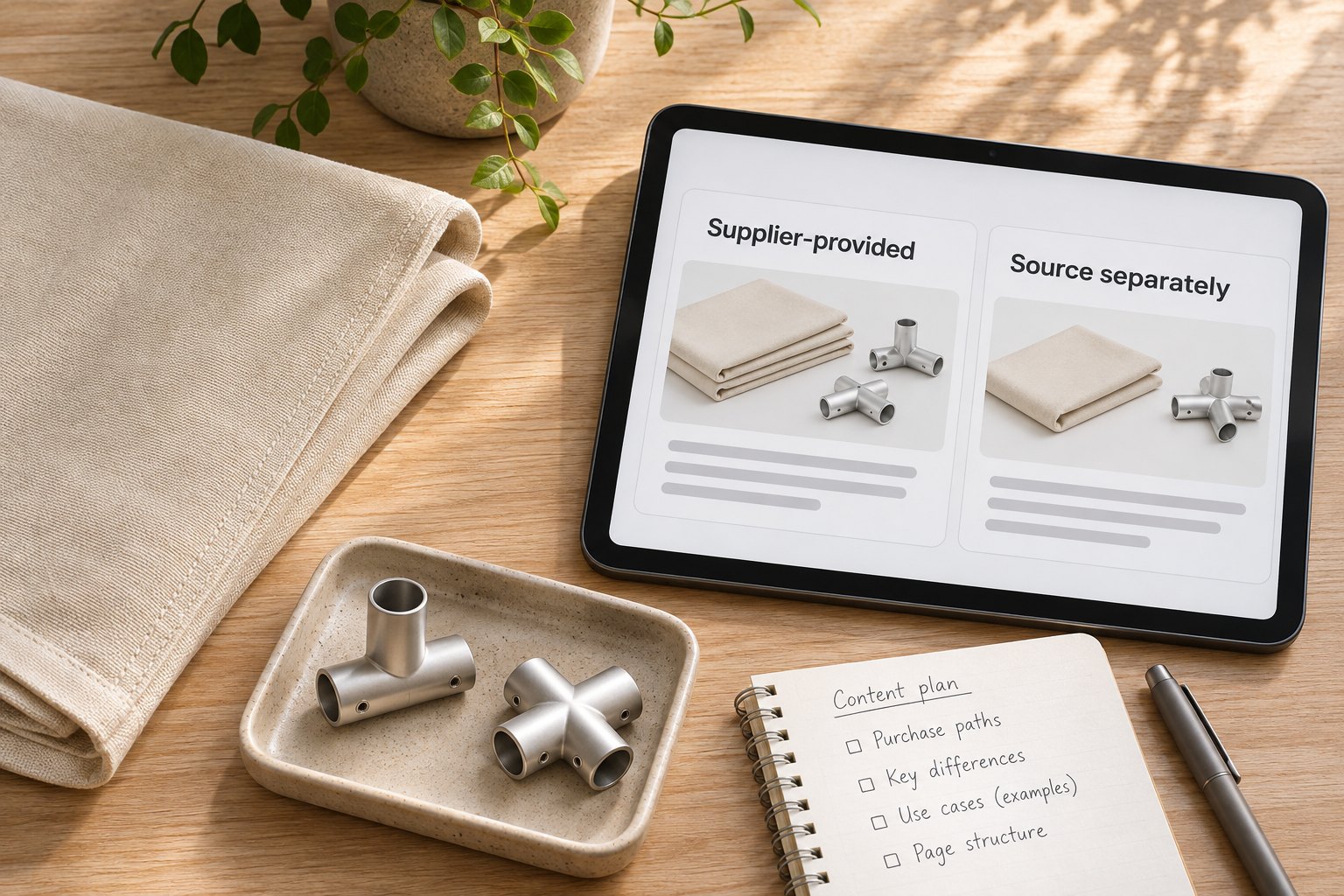
A Sheridan business explicitly offers another sourcing route
Sheridan Tent & Awning's Canvas Wall Tent Bundle page describes a tent with a frame and angles. It also directs customers who prefer to source their own frame to a separate tent and a separate angles link. That published alternative creates a concrete content decision: help the shopper recognize a supported route instead of treating the bundle as the only way to begin.
This is a researched local example, not a Guardian client or a diagnosis of its website. The source establishes an alternative purchase path, not approval of a customer's proposed components. Our editorial task is to explain the seller's actual offer and relevant destinations, with technical suitability left to the provider.
Start with where the customer intends to source the pieces
Read the existing product-family and purchase pages together. Does the content help someone distinguish “I want the supplier-provided combination” from “I plan to source some components separately”? Those are different intentions even when both visitors begin with the same main product.
Ask the business which alternatives it actually supports, what it sells on each route and where the maintained explanation belongs. A short introduction near the product choices can identify the routes without reproducing every specification. Preserve useful material and construction information; add the missing buying context rather than replacing the whole page.
Then check discovery from outside the bundle page. A category introduction that links only to the combined offer may leave the separate route difficult to find. Where appropriate, a descriptive link can connect the relevant category or product explanation to the individual offer. The destination should answer the question suggested by that link.
A fictional assignment: the shopper is choosing a sourcing path
Imagine a fictional outdoor retailer with a supplier-provided shelter-and-support offer and a separate shelter option for customers obtaining supports independently. The owner confirms that both routes are genuine. A customer arrives from a broad product page and asks, “Can I buy the shelter here if I am arranging the supports separately?”
The useful SEO assignment is not another camping article or a compatibility calculator. It is an approved explanation of the two buying paths, placed where that customer chooses, with links to the existing offers.
- Supplier-provided route: identify the actual combined offer and link to its maintained product information.
- Separate-sourcing route: identify what the retailer sells separately and connect the relevant existing destinations, using the owner's approved wording.
- Unresolved suitability: explain the actual provider contact route for a question that the public information cannot answer.
- Entry-page connection: make the alternative discoverable from the product family, not only from a note at the end of one offer.
This is an invented editorial example, not Sheridan Tent's customer feedback or a proposed component combination. It illustrates a navigation and content brief, not instructions for sourcing, cutting or assembling equipment.
Make each link describe the buying route
“View the tent-only option” tells a shopper something different from “View the tent-and-frame bundle.” These are suggested labels for the fictional example, not claims about a live transaction we tested. Use the business's actual offer names and keep the alternative visible where it becomes relevant.
A useful connection also works in the other direction. Someone who reaches an individual product from search may want the supplier-provided combination. Link to it where it helps, without turning the separate option into a dead end or implying that every visitor should upgrade.
Keep a concise contents explanation on each product page as supporting information. The main question here is which sourcing path the customer wants to explore. Avoid repeating a full inventory across category copy, comparison articles and FAQs when one maintained product explanation can supply the detail.
Support a choice without making the technical decision
A separate-purchase route is not a blanket statement that any independently sourced component will fit. Content can explain what the seller offers without choosing a component for the customer. Link to existing provider-approved guidance where it is useful; send unresolved technical questions through the business's established process.
Do not position independent sourcing as automatically cheaper, faster or simpler. Those conclusions depend on facts outside the basic product description. A clear route remains commercially useful without an unsupported saving claim or assembly tutorial.
Improve the existing destinations before creating a new landing page for every possible sourcing combination. A focused comparison is worthwhile when it adds a substantial answer. Otherwise, an explanatory section and well-labeled links can make the choices clearer with less content to maintain.
Use continuing SEO reviews to improve the paths that matter
When the business changes what it supplies separately or together, review the affected product explanation and incoming links. Keep the accurate unrelated copy. Confirm that someone arriving through a category and someone arriving directly from search can still recognize the supported alternatives.
At recurring reviews, use available organic query and landing-page evidence alongside summarized buyer questions. If people ask whether separate purchase is possible, improve that explanation or its placement. If they understand the choice but repeatedly land on the wrong offer, inspect the link wording and destination. If questions are mainly technical suitability, identify the appropriate expert resource rather than expanding the sales copy into advice it cannot support.
Distinguish product research, appropriate purchase inquiries, completed orders and existing-order assistance. A click into an alternative offer is not a sale. Use reliable attribution rather than assigning every purchase to organic search; leave an unknown source unknown.
The recurring engagement can address other product categories, service content and technical priorities as evidence warrants. The value is a more useful buying path and a reasoned next improvement, not a quota of loosely related outdoor articles. A broken selector or checkout function needs separate technical assessment; wording alone cannot repair it.
Bring the alternative your website needs to explain
Guardian's Add All Electric case study describes service-focused website and ongoing SEO work for a Dallas–Fort Worth electrical business. It reports increased website inquiries during the first year of that combined engagement, not a Sheridan retail conversion result or a forecast for your shop.
Bring the current product pages, the sourcing paths your business actually supports and a question customers keep asking about the choice. Discuss ongoing SEO for your Sheridan business. We can identify the first content or link improvement and agree how subsequent evidence will guide the work.
Questions about Sheridan organic SEO
What should the page explain when customers can source components separately?
Name the actual supplier-provided and separate-purchase paths, explain what the business offers on each, and link to the maintained destinations. A shopper should recognize the alternative without assuming that all independently sourced components are suitable.
Where should the alternative buying route be linked?
Place it where the customer is choosing, including a relevant product-family or offer page. Someone arriving directly at an individual product may also benefit from a link to the genuine combined offer. Use descriptive labels that explain the destination rather than identical unexplained purchase buttons.
Does a separate product option confirm compatibility with components sourced elsewhere?
No. It establishes a purchase route, not approval of a particular combination. Use the provider’s actual guidance and contact process for unresolved suitability questions. SEO content should not invent technical specifications or assembly advice.
Should the separate-sourcing route be described as the cheaper option?
Only if the business can support the specific comparison. Product descriptions alone do not establish the customer’s full cost, timing or effort. It is enough to explain the genuine choice without making a savings promise.
Do these paths need separate new SEO landing pages?
Not automatically. Improve the existing product destinations and their connections first. Add a substantial comparison only when it answers a distinct useful question, rather than duplicate product details across every possible sourcing combination.
What belongs in a recurring review of the buying paths?
Check changed offers, affected product explanations and incoming links. Use available organic page evidence and aggregated buyer questions to decide whether the next task is clearer wording, better placement, a more descriptive link or an appropriate expert resource.
How should results from an alternative-offer link be interpreted?
A link click shows a navigation action, not a completed purchase or newly acquired customer. Separate product research, appropriate inquiries, orders and existing-order support. Use supported attribution when assessing organic SEO and leave unknown sources explicit.
Explore Wyoming service areas or nationwide remote SEO support.