
A custom project photograph shows that something was made. It may not tell a business buyer whether the workshop also accepts a run of similar parts. For a Cheyenne manufacturer, that unanswered production question can deserve the next SEO investment.
Guardian Solutions provides ongoing organic SEO for Cheyenne businesses. We improve service explanations, supporting content, internal links and technical search priorities around the work you want to sell. We collaborate remotely from Colorado Springs. The fabrication example concerns a marketing assignment, not manufacturing or engineering supplied by Guardian.
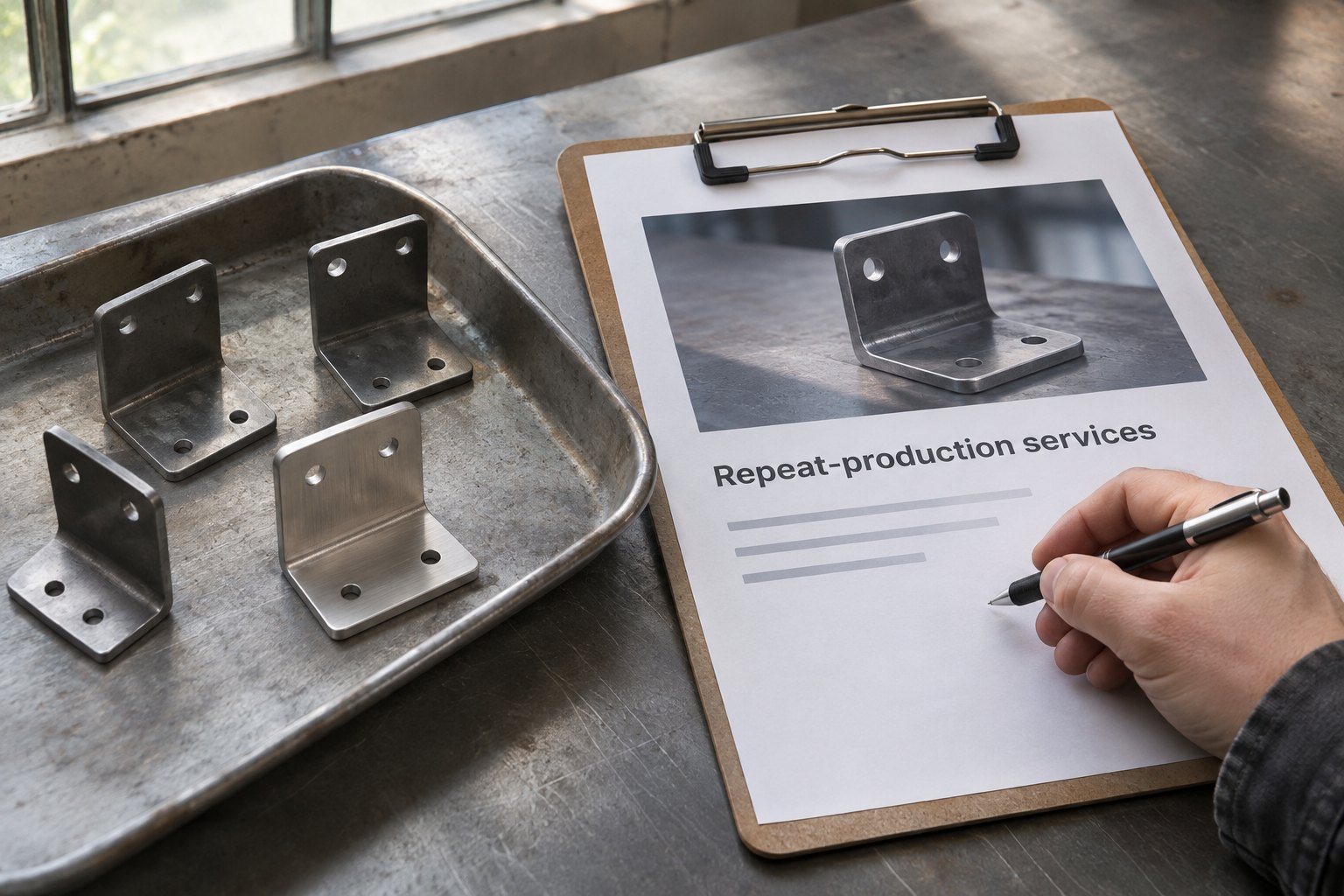
A local offer includes both individual projects and repeat work
Supercell Welding & Fabrication identifies Cheyenne and describes custom fabrication ranging from one-off projects to repeat production parts. Its public introduction also describes work with contractors. That is a concrete reason to explain the production relationship, not leave every prospective customer to interpret a gallery of individual pieces.
Supercell is a researched local example, not a Guardian client or a business whose website we have diagnosed. Its description supports the existence of those service categories, not a particular order quantity, available machine time or delivery commitment.
Help the buyer understand what “repeat work” means for your business
Begin with the production owner. Does the business accept repeated manufacture of an agreed part, several related variations, periodic reorders or some combination? Which distinctions can be explained publicly? Use the answer to organize the existing fabrication page rather than assuming every custom job is also a repeatable catalog product.
The commercial explanation can identify the kind of work considered and the point at which the shop reviews requirements. It should also make clear how a prospective production customer starts a discussion. The technical assessment, approved drawing and actual production commitment remain with the manufacturer.
This is useful content even when quantities and timing are decided individually. “We consider repeat production” and “this item is in stock for immediate reorder” are different offers. A descriptive service page can explain the former without inventing the latter.
A fictional brief: one prototype photo, a question about a run
Imagine a fictional metal shop that accepts both individual custom projects and repeat-part discussions. Its gallery contains an authorized photograph of a single bracket. A prospective business customer wants to know whether a run of parts is a service the shop considers, but the website talks only about that finished one-off job.
The first content assignment is not to turn the pictured bracket into a product listing. Instead, improve the existing fabrication explanation with the owner's approved account of repeat work. Then add a relevant link near the example, such as “Discuss repeat-part fabrication,” if that is the destination's actual purpose.
A concise brief would specify three deliverables:
- A production-service section: describe the repeat work the shop considers and the general questions the initial discussion resolves.
- An honest project caption: retain what the pictured job actually demonstrates, without presenting one piece as evidence of a completed production run.
- A useful connection: link the example and the broader service so a business buyer can find the production explanation without searching through unrelated custom projects.
The bracket, inquiry and website gap are invented teaching facts, not Supercell's customer history. No technical drawing, capacity figure, tolerance or production result is supplied by this example.
Explain repeat orders without inventing an automatic reorder
A returning customer may refer to previous work, but the business still needs its actual review process. Public content can tell customers where to discuss a repeat request and what general reference helps the shop find the right conversation. The writer should not promise that a past order preserves its price, material, specification or delivery date indefinitely.
Keep new production inquiries distinguishable from questions about an existing order. If a customer proposes a changed part, the website should direct that discussion to the shop rather than call it an identical reorder. This does not require publishing private drawings or building a customer portal as the first SEO task.
For a business with useful public technical information, link it where it answers a real question. Keep the essential service explanation readable on the page. A machine list can support the discussion, but it does not by itself tell a buyer what kind of commercial engagement the shop accepts.
Build depth where the actual offer supports it
One clear section can be enough to start. A separate repeat-production page earns its place when the company can supply substantial, distinct information about the service. It should not be a copy of the custom-fabrication page with “production” inserted into every heading.
Preserve useful one-off project content. An individual customer can still need custom work, while a contractor may be exploring a continuing supply relationship. Organize the information so each can understand the supported offer without suggesting that every customer must commit to a production run.
As appropriate material becomes available, the business can authorize a real production example with facts about its role and the work delivered. A persuasive account does not need an invented cost saving or capacity claim. Guardian can interview the responsible people and turn approved information into original content connected to the service.
Use recurring SEO to improve the questions prospects can answer
After the update, check whether a visitor can recognize the repeat-work service and reach its discussion route from the relevant project or service overview. A gallery should remain useful without becoming the only way to infer the business's capabilities.
At the next review, combine available organic query and landing-page evidence with summarized inquiry themes. If buyers still think the shop only makes individual decorative pieces, improve the production explanation or the route into it. If that is understood but repeat customers cannot find the appropriate contact, improve that connection. If questions concern an unsupported quantity or process, have the owner determine whether wording is misleading before expanding the offer.
Separate new production opportunities, individual custom jobs and existing-order support when reviewing contacts. A gallery visit is not a production order, and several reorder messages are not necessarily several new customers. Use reliable attribution and the business's own qualification criteria.
The ongoing plan can address other priority service pages, supporting resources and technical issues too. Agree factual approval, implementation and the next evidence review, rather than paying for a fixed stream of general metalworking articles.
Start with the commercial question your site leaves open
Guardian's Add All Electric case study reports increased website inquiries from service-focused website and ongoing SEO work for a Dallas–Fort Worth electrical business. It describes the first year of that combined engagement, not a Cheyenne production result or a prediction for your shop.
Bring the existing service page, an authorized example and the kind of work you want suitable customers to ask about. Discuss recurring organic SEO for your Cheyenne business. The first useful improvement may be explaining a real production service that your project gallery alone cannot describe.
Questions about Cheyenne organic SEO
What should a repeat-production service page explain?
The kind of repeat work the business considers, how it relates to individual custom projects and how a prospective customer begins the discussion. Use the production owner's approved facts. Exact feasibility, specifications and commitments are determined through the manufacturer's actual process.
Does a photograph of one custom part prove production-run capability?
No. Describe what that project actually shows. If the business separately offers repeat production, explain that service and link to it without making the photograph stand in for evidence of a completed run or a capacity claim.
Must we publish a fixed minimum quantity to make the page useful?
Only publish a minimum when it is an actual approved condition. A useful service explanation can identify the work considered and the discussion required without inventing a number. The business, not the SEO writer, sets order terms.
Does repeat production mean an item is available as stock?
Not necessarily. Producing parts against an agreed job and selling stocked units are different offers. Make the actual arrangement clear and avoid using product-purchase language when the next step is a production discussion.
How should the website handle a request to repeat a previous job?
Explain the business's supported contact or review route. Do not assume that the earlier specification, price or timing automatically applies, especially when the request changes. Keep confidential production records within the provider's established process.
Should one-off and repeat fabrication always have separate pages?
No. A shared service page can explain both well. Add another destination only when substantial distinct information will help the buyer, not merely to repeat the same capability under a new keyword.
What should ongoing SEO review after the first improvement?
Whether appropriate production prospects can understand the offer and find the next conversation, using available organic evidence and recurring questions. Keep individual jobs, new production opportunities and existing-order support distinct. Choose the next content or link improvement rather than assuming every review requires another article.
Explore Wyoming service areas or nationwide remote SEO support.