
Guardian Solutions provides ongoing organic SEO for Rapid City businesses, connecting useful service content, relevant links and technical search improvements. For a project-based business, one of the most valuable answers may be when a particular stage can happen, not another description of the finished result.
A customer replacing one part of a room and a customer still installing new cabinets may be considering the same countertop service from different starting points. The website should help each understand the next useful conversation. We plan this content remotely from Colorado Springs as part of a broader organic SEO engagement. Guardian provides marketing work, not construction or countertop installation.
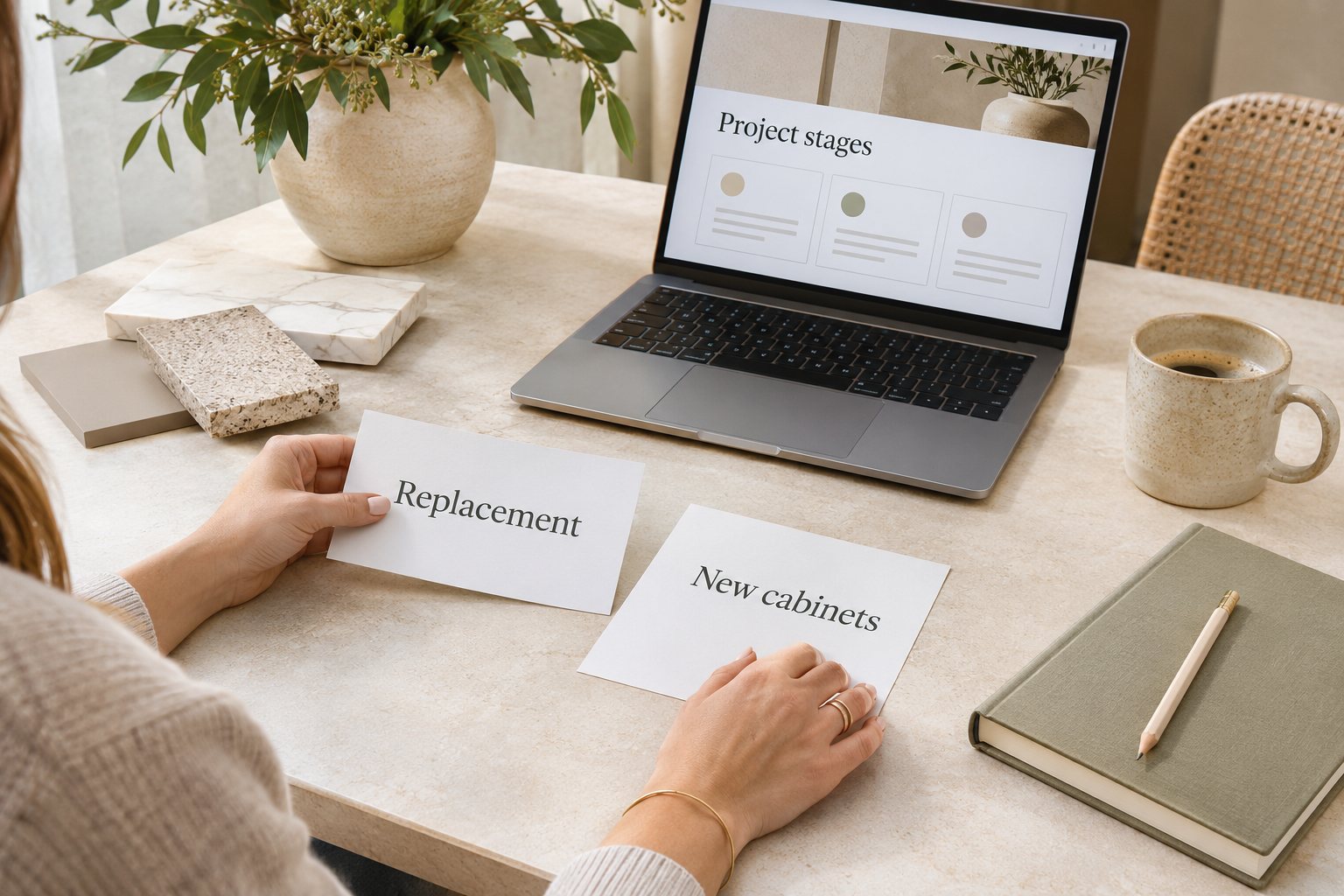
A Rapid City example makes project readiness matter
Black Hills Countertops, Etc.'s FAQ identifies its Rapid City location and distinguishes two situations. For a straightforward replacement, it describes existing tops remaining until installation. For new construction or new cabinets, it says measurement waits until the new cabinets are set.
These are that provider's published process descriptions, not universal instructions for a building project. They show why “get new countertops” may need more context: the customer's current project stage affects the next step. The company is a local example, not a Guardian client or a website we are diagnosing.
Put the readiness question beside the service explanation
Begin with the actual service page and the questions prospective customers ask before work starts. Does the page distinguish a replacement from a project still being prepared? Does it explain which stage the business can discuss now and which stage depends on readiness? Have the responsible provider approve those facts.
A useful opening can welcome an early project conversation without promising an immediate measurement visit. The main explanation should identify the relevant situations in ordinary language. Detailed preparation requirements belong in the provider's maintained information, not in a checklist invented by the SEO writer.
This creates a specific content assignment: clarify the project-state distinction, connect it to the relevant service process and check the summaries that introduce that process. It does not require a new website or a scheduling tool before the customer can understand the offer.
A worked brief for an imaginary countertop business
Consider a fictional provider whose owner confirms that an existing-countertop replacement and a new-cabinet project have different measurement-readiness requirements. Its service page currently says, “Choose your finish, then book measurement,” without explaining the difference.
The next SEO brief should preserve the useful material information while improving the process explanation. Ask for a short comparison with three parts:
- Name the customer's situation. Distinguish a replacement using the existing arrangement from a project with new cabinets still being installed. Use only the scenarios the business actually supports.
- Attach the readiness condition. Explain the provider-approved relationship between that situation and professional measurement. Do not turn one scenario's condition into a rule for every project.
- Offer the appropriate next conversation. Help an early-stage customer discuss the project, while directing a ready customer to the business's actual scheduling process. An inquiry should not be described as a confirmed visit.
The invented sentence and scenario are not taken from Black Hills Countertops' website. The deliverable is a clearer service explanation that helps the customer identify their stage. The provider still decides readiness, technical requirements and scheduling for the actual job.
Keep preparation information and early discussion connected
A person whose project is not ready for measurement may still have a legitimate question about materials or the overall service. Do not turn a readiness condition into a message that the business cannot speak with them yet, unless that is genuinely its policy.
Use the existing pages to support both needs. A material-options page can help someone explore a choice. A process section can explain how the work progresses. A maintained preparation resource can supply the detailed requirements the provider approves. Link them where those questions arise, rather than expecting a customer to reconstruct the sequence from a gallery.
For the fictional provider, “Discuss your project stage” and “Read measurement preparation information” describe different destinations. Confirm that the actual links support those tasks. Keep an accurate phone or inquiry route if the next step is a personal conversation; a new automated eligibility form is not the default SEO purchase.
A simple comparison can be more useful than another landing page
Often the existing service page can explain the two project situations clearly. A separate destination becomes worthwhile when it offers substantial information for a genuinely different need. Do not repeat the same process under several room or neighborhood headings merely to create more search pages.
Retain good photographs and material descriptions in their proper role. They can help explain the appearance or kind of work, but they do not establish that a visitor's current room is ready for professional measurement. A process explanation should carry that information rather than leave a finished-project image to imply it.
Review the title, short summary and relevant calls to action together. A headline offering a project discussion can be accurate for an early-stage visitor; a promise of immediate installation needs entirely different support. Search-facing wording should not skip the stages that the actual service requires.
Give the first change a practical acceptance check
Read the published explanation from both starting points. Can the replacement customer identify the relevant process? Can the new-cabinet customer see that measurement has a readiness condition? Can someone who still has questions reach the appropriate discussion without being told that a visit is already booked?
Check the links and short descriptions that lead to the answer, not only the new paragraph. If an older overview still presents one universal sequence, update that affected summary with approval. Leave accurate unrelated pages alone.
At continuing SEO reviews, compare available organic query and landing-page evidence with summarized customer questions. Repeated confusion about project stage may justify a clearer comparison. If the answer is already clear but hard to find, improve the relevant internal route instead of writing another general renovation article.
When the business changes its process, have the responsible person identify which explanation and preparation information need updating. Keep inquiry types meaningful: early planning, requests for a visit and support for an existing job are different activities. None is automatically a completed installation or a lead attributable to organic search.
Discuss a recurring scope grounded in real work
Guardian's Add All Electric case study describes service-focused website improvements and ongoing SEO for a Dallas–Fort Worth electrical business. Its reported first-year increase in website inquiries belongs to that combined engagement, not a Rapid City installation project. Use the account to discuss the work and evidence behind your own proposal.
Bring the service page, the starting situations you support and the stage customers often misunderstand. Discuss ongoing SEO for your Rapid City business. Guardian's broader organic SEO service can address priority content, links, technical needs and reporting beyond this first assignment, with implementation responsibilities agreed in advance.
Questions about Rapid City organic SEO
What should a service page explain when customers begin at different project stages?
Name the supported starting situations and explain how each affects the next service step. Use the provider's approved process rather than one generic sequence. A clear comparison on the existing page may answer the question without adding another landing page.
Can a customer begin a discussion before being ready for measurement?
Describe the business's actual policy. A readiness condition for a professional measurement visit does not, by itself, mean early questions cannot be discussed. Keep the project-information route clear without promising an appointment or inventing a preparation service.
Should the writer apply one provider's cabinet-readiness rule to every business?
No. The Rapid City example illustrates why the question matters, not a universal construction requirement. Your provider supplies and approves its own process, preparation information and readiness decisions. Guardian organizes that information for useful service content.
Where should detailed preparation information appear?
Keep the essential project-stage distinction on the main service page and link to the provider's maintained preparation information where more detail is needed. Do not make a customer search a gallery for the process or reproduce technical instructions the responsible business has not approved.
Can finished-project photographs establish that a new customer's site is ready?
No. They illustrate the work they actually show. Use a clear process explanation for readiness and leave the individual assessment to the provider. Preserve useful authorized images without treating them as a substitute for information about the next service stage.
Does a clearer process explanation require an automated scheduling tool?
Not automatically. Accurate content and a relevant existing discussion or scheduling route may meet the need. A new form, readiness checker or booking integration requires separate assessment. An inquiry should not be labeled as a confirmed visit unless the actual process supports that outcome.
What should continuing SEO review after the first change?
Check remaining questions about project stage, relevant incoming links and any changes to the provider's process. Use available organic evidence alongside inquiry themes to choose the next task. Distinguish early planning, visit requests, existing-job support and completed work rather than treating them as one result.
Explore South Dakota service areas or nationwide remote SEO support.