
Guardian Solutions provides ongoing organic SEO for Aberdeen, South Dakota businesses. We plan useful service content, internal links and technical search improvements around the work you want to sell. For a business that both sells products and services equipment, an important question is whether existing owners can recognize themselves as prospective customers.
Someone who bought an item elsewhere may need your service without wanting a new purchase. If your business accepts that work, the website should make the opportunity clear. Guardian can help connect the actual service policy to the pages people find, working remotely from Colorado Springs. Our assignment is marketing and website content, not equipment repair.
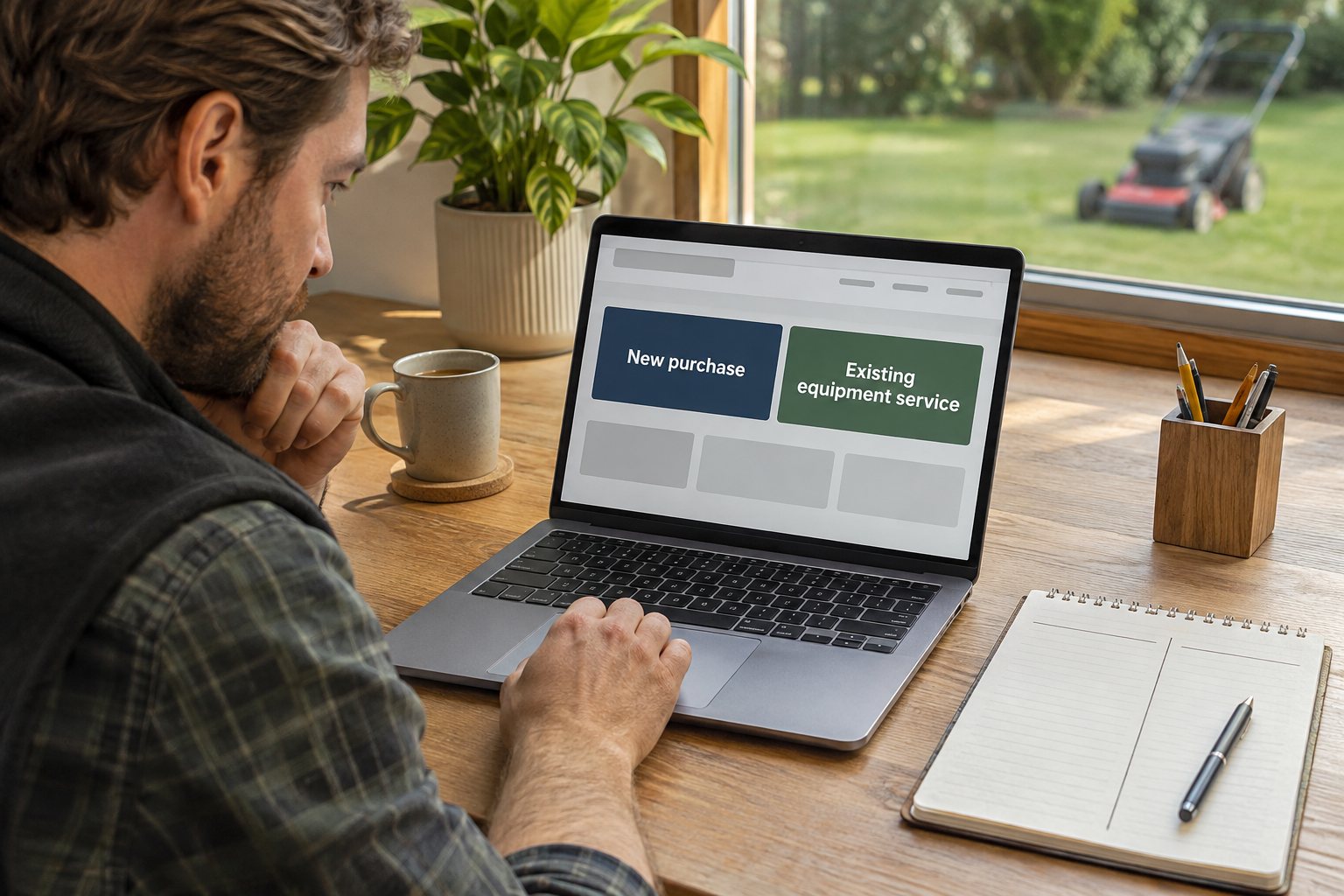
An Aberdeen example separates service from the original sale
Nelson Sales & Service identifies its Aberdeen business and describes small-engine maintenance and repairs regardless of the equipment's brand or where it was purchased. That explicit purchase-source statement adds useful information beyond a list of the products the business sells.
The distinction gives a business owner a practical SEO question: does the service page explain who can use the offer, or does a reader have to infer eligibility from the retail catalog? Nelson is a public example, not a Guardian client or a website we are diagnosing. Its published wording illustrates an answer worth making easy to find.
Let the service policy, not the sales catalog, define the audience
A product page helps someone compare a possible purchase. An equipment-service page helps an owner understand whether to discuss an existing item. Those purposes overlap, but neither page can substitute for the other. A retailer's current brand list does not, by itself, explain its entire service scope.
Start the SEO assignment with the person who approves service work. Establish which equipment and customer circumstances the business actually accepts. Ask specifically about items purchased elsewhere rather than assuming that “we service what we sell” answers the question. Keep any relevant exclusions or assessment requirement attached to that explanation.
Then inspect the current service opening, the main sales-to-service links and any FAQ that describes eligible customers. Improve the missing answer in those places. This is a focused content task; it does not require changing the retail assortment, adding a new workshop system or making a promise about every model a manufacturer has produced.
A worked content brief for an imaginary retailer
Consider a fictional equipment retailer whose owner confirms that ordinary service inquiries are welcome for a defined range of equipment bought from other sellers. Its existing page introduces the workshop only as support for “our customers' purchases.” The assignment is to describe the real, broader eligibility without turning the page into a guarantee that every item can be repaired.
- State the purchase-source answer: explain that buying elsewhere does not, on its own, exclude an owner from the supported service discussion.
- Identify the actual service range: retain the approved equipment categories and any necessary assessment step. Do not replace them with an unsupported “we fix anything” headline.
- Separate ordinary service from warranty: give a warranty question its own accurate explanation or existing route. Acceptance for a repair discussion does not establish warranty coverage.
- Connect sales and service: let a product-page reader find the workshop explanation without having to begin a new-product purchase.
A completed brief should identify the passage to change, the factual reviewer and the pages linking to it. It should also say what will remain: useful product comparisons, accurate service detail and the existing contact process. The fictional retailer is not Nelson, and the proposed wording is not taken from its website.
Give an existing owner a route that fits the question
Review how someone reaches the service explanation from the homepage, product categories and relevant brand pages. “Service for equipment you already own” can describe a different destination from “Shop new equipment.” Use wording that fits the actual destination and keeps both choices available.
A relevant product page may need only a short service link. It does not need the whole eligibility policy copied beneath every item. Keep the authoritative explanation on a maintained service page, with enough context beside each link to prevent a misleading impression. If only part of the range is supported, make that relationship specific.
A warranty route deserves equally precise wording. Do not label a general service inquiry “Book your covered repair” when coverage has not been established. The business, not the SEO writer, determines the applicable service and warranty facts. A clear distinction can make the website more helpful without asking the writer to settle an individual claim.
Choose content depth instead of a page for every brand
An existing service page can often explain the purchase-source policy and the supported equipment range together. A separate brand or equipment page should add meaningful information that the business can support, not repeat the same workshop paragraph with a different heading.
For the fictional retailer, a concise eligibility answer may be the missing piece. If owners also need substantial information about a genuinely different service category, a supporting page could be useful. Decide from the customer question and approved facts, not from a list of brand-and-city combinations.
The search-facing title and description should introduce the actual service scope. A title promising broad repair support should not lead to a page that discusses only new purchases. Conversely, do not expand a truthful narrow offer just to target a broader phrase. Recurring SEO should help the business explain and improve its real offer.
Review the change as part of continuing SEO work
After publication, check the service answer and the links that introduce it. Ask whether a reader can distinguish a new purchase, service for an existing item and a warranty question. Confirm that the short summaries still agree with the full page. This gives the first content assignment a clear acceptance check.
At subsequent reviews, combine available organic query and landing-page evidence with aggregated questions received by the business. If suitable owners still ask whether buying elsewhere excludes them, improve the visibility of that answer. If readers understand eligibility but cannot find the next step, correct the relevant link. If the service range changes, update the affected explanation and summaries.
Keep new sales inquiries, ordinary service inquiries and warranty or existing-customer support distinguishable in reporting. They can all matter to the business without representing the same outcome. Use reliable attribution when available; a service-page visit alone is not a new customer or proof of an organic-search lead.
Guardian's ongoing engagement can also address other priority pages, technical obstacles and useful supporting content. Agree the work and review process around the site, rather than buying a monthly quota of near-identical articles.
Use real project evidence to discuss your own scope
Guardian's Add All Electric case study describes service-focused website improvements and ongoing SEO for a Dallas–Fort Worth electrical business. Its reported first-year increase in website inquiries belongs to that combined engagement, not an Aberdeen equipment-service result. It offers a concrete example of connecting service information with continuing search work.
Bring the service page you have now, the equipment or customer situations you accept and a question your team repeatedly clarifies. Discuss ongoing SEO for your Aberdeen business. We can define the first useful change and how to review it, within a broader organic SEO scope that fits your business.
Questions about Aberdeen organic SEO
What is the first SEO task when we service products bought elsewhere?
Confirm the actual policy with the service owner, then inspect the opening of the existing service page. Make purchase-source eligibility explicit alongside the supported equipment or product range. Keep the assessment process and genuine exclusions clear rather than replacing them with a promise to repair anything.
Does our retail brand list explain everything we can service?
Not necessarily. The products a business sells and the items it accepts for service can differ. Describe each accurately and connect the relevant pages. Do not infer a wider service capability from a brand logo or assume that an unlisted retail brand is automatically excluded from service.
Should ordinary service and warranty inquiries use the same wording?
Only where that wording accurately describes both. A business accepting an ordinary service inquiry does not establish warranty coverage. Explain the difference and use the provider's supported route for warranty questions. Guardian organizes approved information; it does not decide an individual claim.
Where should links for existing equipment owners appear?
Review the homepage, service overview and relevant product or brand pages. Put a descriptive service link where it helps an existing owner continue their task. Preserve the retail purchase route too; someone seeking service should not have to begin shopping for a replacement to find help.
Do we need a separate service page for every brand and city?
No. A clear shared explanation may answer the eligibility question well. Create another page only when it supplies substantial, supported information for a distinct customer need. Repeating the same policy beneath many brand-and-city headings is not a substitute for useful service detail.
How can we tell whether the first content change is complete?
Read the published opening and the summaries that link to it. Confirm that the purchase-source answer, supported service range and next step agree with the approved facts. A visitor should be able to distinguish a new purchase, ordinary service and a warranty inquiry without interpreting the retail catalog.
What should continuing reviews do with different inquiry types?
Keep new-product interest, ordinary service inquiries and warranty or existing-customer support distinguishable. Compare recurring questions with available organic evidence to choose the next content or linking improvement. A page visit is not a new customer, and unknown source attribution should stay unknown.
Is Guardian's Aberdeen offer limited to equipment businesses?
No. The Aberdeen example makes one content decision concrete within a broader recurring organic SEO service. Guardian can plan priority content, internal links, technical work and reporting around your actual business. The service provider remains responsible for product, repair and warranty decisions.
Explore South Dakota service areas or nationwide remote SEO support.