
Guardian Solutions provides ongoing organic SEO for Warwick, Rhode Island businesses. We improve the information customers find, the links that connect it and the technical priorities that support a useful website. For a business publishing seasonal documents, one concrete assignment is keeping the service page and the document it recommends in agreement.
A customer should be able to understand the offer, identify the relevant document and see which period it covers. That requires more than uploading a new file. Guardian plans the content and search work remotely from Colorado Springs; the business remains responsible for its service arrangements and approved documents.
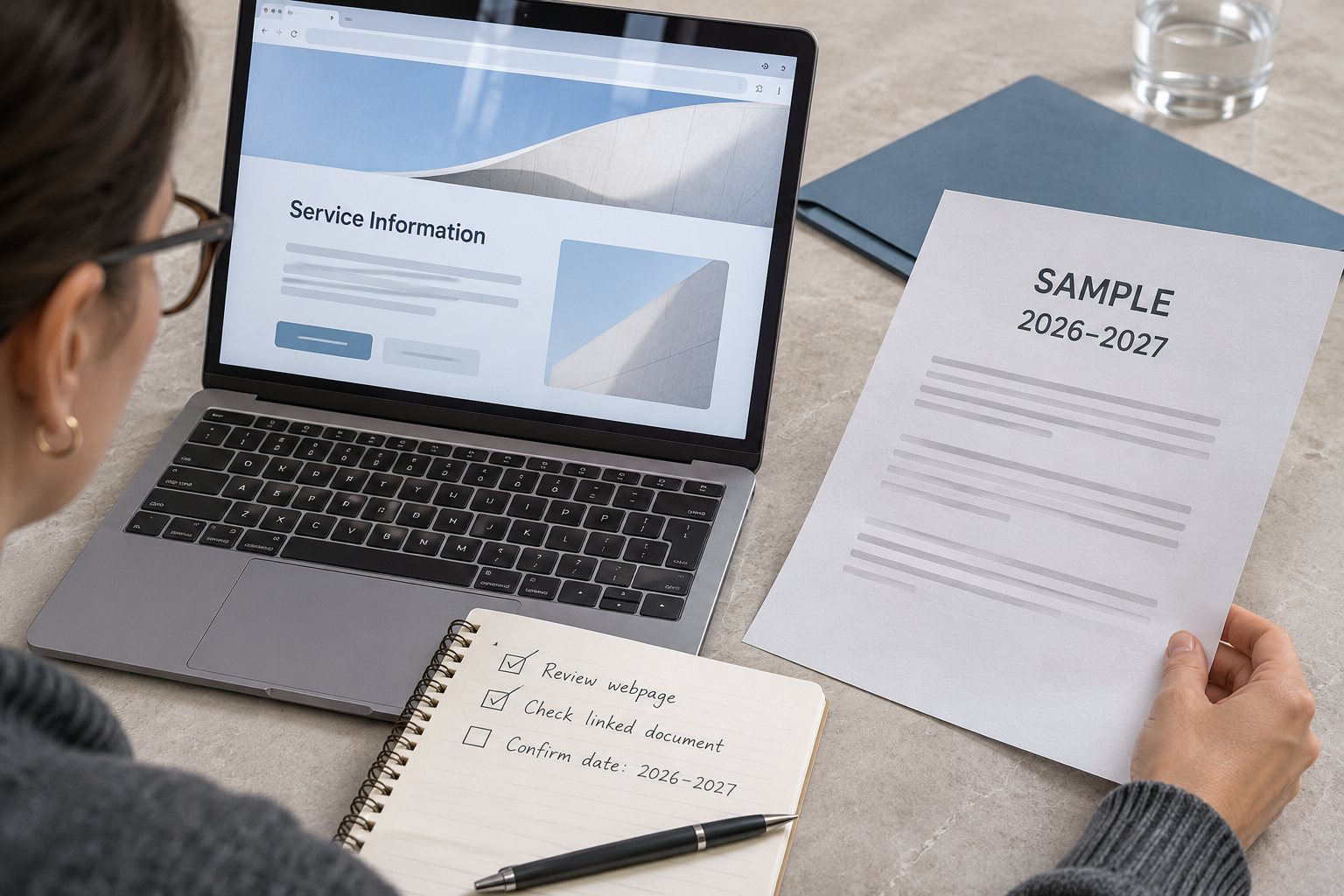
A Warwick example connects a service page with dated downloads
Fairwinds Marina's winter-storage page identifies its Warwick location, describes land and in-water storage and supplies separate downloads. When reviewed on November 12, 2026, those links led to 2026–2027 land-storage information and a 2026–2027 in-water document.
The current links and dated documents provide a useful example of a connected content set. Fairwinds is not a Guardian client or a business we have diagnosed as having a version problem. The example establishes the document relationship, not available storage space or acceptance of an application.
Keep the service explanation useful before the download
The webpage should help a prospective customer understand the service and choose the relevant information. A dated document can carry the detailed material it was designed to provide, but a generic “Download” link alone may not explain its purpose to someone arriving for the first time.
Start with the existing service page. Confirm which offer it describes, what the current document is for and who can approve any public summary. Preserve accurate information that remains useful from one period to the next. The first SEO improvement may be a clearer introduction and a better-labeled link, not a new annual landing page.
For a business with land and in-water storage documents, the distinction belongs beside the links. Readers should not need to open both files to discover which one concerns the service they want. Where the year matters, include it in the label along with the document's actual purpose and format.
A worked content check for a new season
Imagine a fictional seasonal service business approving its next year's information sheet. A staff member uploads the new PDF, but the service page still labels the download with the previous period. This is an invented example, not a finding about Fairwinds.
A bounded organic SEO assignment can check four things together:
- The service explanation: does the page still describe the actual offer, with a current route for questions?
- The link label: does it identify the correct service, period and PDF destination rather than merely saying “latest”?
- The opened document: do its visible heading and stated period match the approved selection? Check the document itself, not only its filename.
- The incoming references: do relevant overview pages still send customers to the right explanation and document?
The deliverable is a consistent public route from a useful service explanation to the intended document. Record which version the owner approved and verify what readers can open after the change. Do not call the task finished simply because the upload succeeded.
Choose a stable page instead of an automatic annual duplicate
When the underlying service remains the same, its useful explanation may belong at one established address. Update the owner-approved seasonal information and document references there. A different year in a title is not, by itself, enough reason to publish another near-identical service page.
A separate dated resource may still be useful when it contains substantial information for that period or serves a legitimate record-keeping purpose. Make that purpose visible and connect it with the relevant service context. Decide what to retain with the business rather than deleting old documents merely to make the website look newer.
If an older document remains publicly available, discuss how a reader should recognize its period and find current service information. Any change to document content, archive handling or URL behavior needs its own approved implementation plan. A content review should not silently alter contractual records or assume every old address should redirect somewhere else.
Keep summaries accurate without rewriting the agreement
A short service summary can help customers choose the right information. It should not invent a booking guarantee, flatten important qualifications into a headline or replace the actual document with an unapproved interpretation. The business and its appropriate advisers approve terms and any explanation of them.
For the fictional service, a year-labeled download tells a reader which document to inspect. It does not establish that space is available, that a request will be accepted or that the document applies to every customer's circumstances. Keep those operational questions connected to the provider's real inquiry process.
Guardian's SEO work can organize approved information, improve page wording and relevant links, and identify technical discovery issues. Drafting agreements, deciding legal retention requirements or building an application system is not included by implication.
Use the next review to find a specific content problem
At the agreed review, use available organic query and landing-page information alongside recurring customer questions. If people can find the service but keep asking which document applies, improve the labels or the explanation. If the labels are clear but an overview links to an unintended version, correct that reference. If a good explanation is hard to reach from the service directory, improve that route rather than duplicating the page.
Timing the review around an actual document change can make the work practical. Ask the business who approves the new material and which public references need checking. A publication date should reflect the change that was actually made, not serve as a substitute for reviewing the content.
Reporting should keep service-page visits, document downloads, relevant inquiries and accepted arrangements distinct. Someone downloading a PDF may be researching, comparing periods or looking up an existing arrangement. Count a qualified opportunity only under the business's criteria, and retain unknown organic attribution where reliable evidence is unavailable.
The continuing SEO plan can include other service content and technical priorities. Choose the next task from a real information need, not a fixed quota of new seasonal pages or a promise that replacing a document will improve rankings.
Start with the page and document customers actually use
Guardian's Add All Electric case study describes website and ongoing SEO work for a Dallas–Fort Worth electrical business, including service-focused content and technical improvements. It reports increased website inquiries in the first year of that combined engagement. That is published project evidence, not a Warwick storage result or a forecast.
Bring the public service page, the document it should recommend and the person who approves the information. Discuss ongoing SEO for your Warwick business. Agree the first content check, required changes, relevant links and evidence for reviewing progress. Guardian's ongoing organic SEO service supports a broader plan around your actual priorities.
Questions about Warwick organic SEO
Does a downloadable document replace a useful service explanation?
Not necessarily. The webpage should help a customer understand the service and identify the relevant document. Keep useful existing content, and add a clearer introduction or link label where needed. The document can carry its approved detailed purpose without making the webpage an unexplained download button.
What should we check when a new seasonal document is approved?
Check the service explanation, link wording, opened document and relevant incoming references together. Confirm the visible document heading and period against the owner's approved selection. An upload completing successfully does not establish that customers are being sent to the right version.
What makes a download link informative?
Identify the document's actual purpose and format, and include the period when it matters. Distinguish different service options near their respective links. A label such as latest information can become unclear over time; specific wording lets the reader understand the destination before opening it.
Does each new year require another SEO service page?
No. A stable service page may remain the most useful home when the underlying offer is unchanged. Update its approved seasonal details and links. A separate dated resource should have a genuine informational or record-keeping purpose, not simply repeat the same service under a new year.
Should old documents automatically be deleted or redirected?
No. Establish their purpose, the business's retention needs and the effect on existing links first. Agree how readers should recognize dated material and find current information. Document changes and URL handling require an approved implementation plan rather than a blanket cleanup rule.
Can a service-page summary replace the document's terms?
The summary should accurately introduce the approved information, not invent or reinterpret conditions. The business and appropriate advisers decide the terms and approve any explanation of them. Guardian's content role does not include legal drafting or deciding which agreement applies to a customer.
Does a current document establish availability or acceptance?
No. A document's period identifies the information being presented. Availability and acceptance remain operational questions for the provider. Connect readers with the actual inquiry process rather than turning a current date into a guaranteed booking or service promise.
Should every PDF download count as a qualified organic lead?
No. Downloads can reflect research or existing-customer needs as well as new interest. Keep downloads, inquiries and accepted arrangements distinct. Apply the business's qualification criteria and report organic attribution only when reliable evidence supports it.
What should recurring SEO improve after the first document check?
Use customer questions, changes to the approved information and available organic page evidence to choose the next task. That may be clearer labels, a corrected reference, a more useful service explanation or a technical discovery check. Preserve sound content rather than creating annual duplicates by default.
Explore Rhode Island service areas or nationwide remote SEO support.