
Guardian Solutions provides ongoing organic SEO for Newport, Rhode Island businesses. We improve the service information customers find, connect related pages and address technical search priorities within an agreed plan. When one business offers several related services, the first useful assignment may be helping customers understand each one before they make an inquiry.
A marina and repair yard is a practical local example. Someone seeking a place to keep a boat and someone planning repair work may visit the same website, but they do not need the same explanation. Guardian provides the marketing work remotely from Colorado Springs, not marina operations or marine advice.
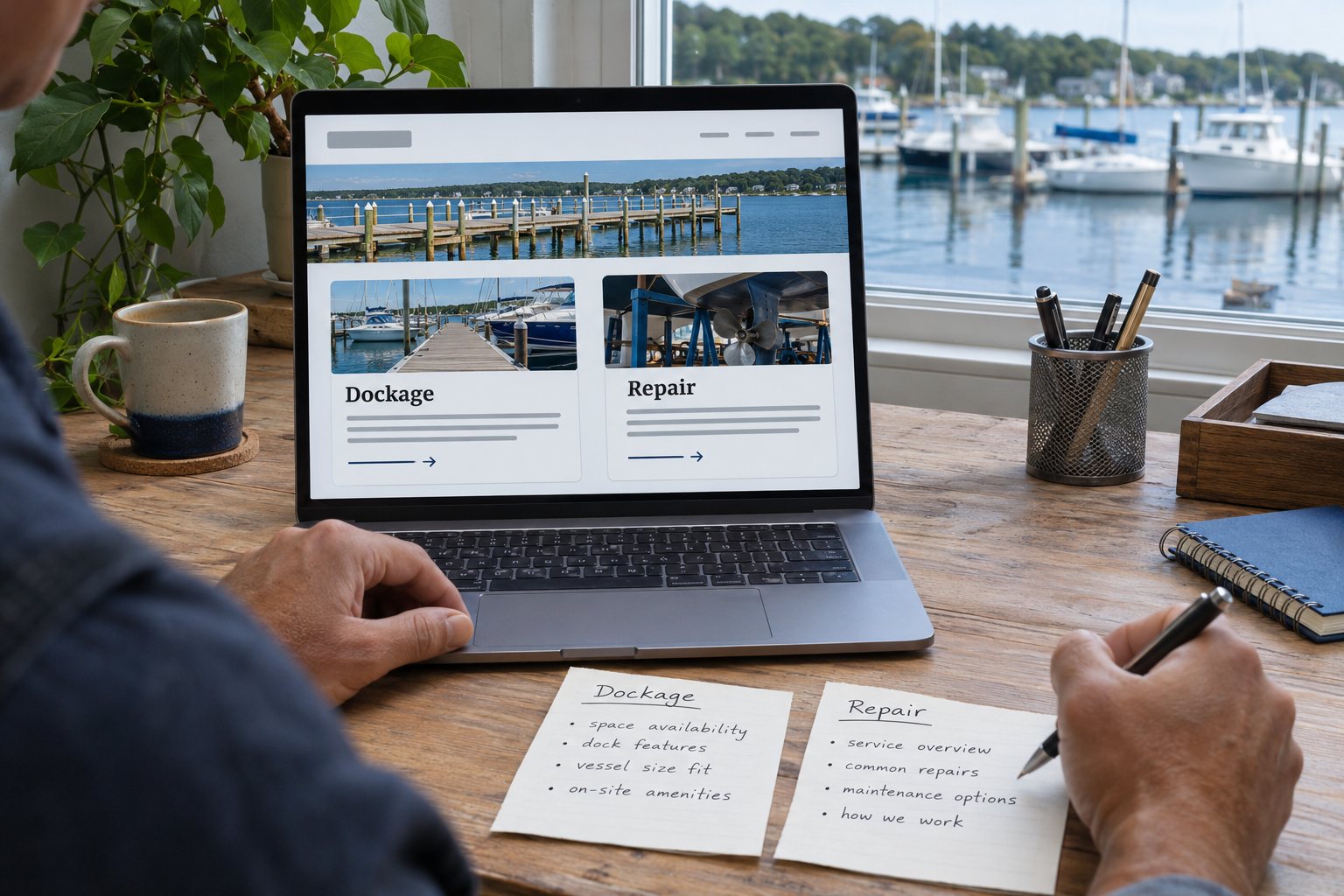
One Newport facility, two useful service explanations
Safe Harbor Newport Shipyard publishes a refit and repair page describing its service work and inviting a project description. It also has a separate dockage request page for its Newport marina. Its dockage information directs readers to request rates rather than presenting a universal price for every stay.
Those published distinctions make the content task concrete: explain the service a customer is considering, then identify the appropriate conversation. The shipyard is a researched example, not a Guardian client or a website we have diagnosed as deficient. A business can offer both services without making every inquiry a request for both.
Give the service page a job beyond sending people to a form
A request page helps someone start a conversation. The service explanation should first help them understand whether that conversation is relevant. For a marina, that could mean the kind of dockage offered, the facility information a visitor needs and how to ask about the proposed stay. A repair explanation instead needs approved information about the work the yard considers and how a customer begins discussing a project.
Begin with the pages already doing this work. Keep accurate, useful material and identify the specific unanswered question. If a request page already contains a substantial service explanation, improve it rather than creating a near-copy elsewhere. If it is little more than a form, a meaningful service section or a better link from an existing overview may be the right first investment.
The SEO brief should name the page, the missing explanation, who approves the facts and the links that will help a reader continue. It should not assume that replacing the booking system will solve an unclear offer.
Fictional assignment: a visitor wants a stay and a repair discussion
Imagine a marina and yard whose visitor wants to ask about a short stay and discuss a minor repair during the visit. This is an invented editorial example, not a real inquiry or a statement about Newport Shipyard's arrangements. The business confirms that it welcomes both types of discussion, but availability and project acceptance are assessed separately.
The next organic SEO assignment can improve three existing pieces of content:
- The dockage explanation: clarify what the visitor can ask about the stay and link to the actual dockage request. Do not describe that request as approval for repair work.
- The repair explanation: describe the supported project discussion and link to it. If a visitor may also need dockage information, provide a clearly labeled related link rather than suggesting that a repair inquiry reserves a berth.
- The shared overview: introduce both services in plain language so a customer can find either explanation without knowing the yard's internal departments.
This produces useful service content and a coherent route through the existing site. Staff still confirm the arrangements. The writer's job is to explain the relationship accurately, not to combine two requests into an invented package.
Make related links useful without blending the offers
Some customers will need both pages; others will need only one. A dockage page can link to repair information where that helps the reader, without making repair work sound compulsory. A repair page can point to relevant marina information without promising that every project includes a stay. The surrounding sentence should explain why the other page may be useful.
Use labels that describe the destination. “Explore refit and repair services” leads to an explanation; “Request dockage” describes an inquiry. “Book everything” would be misleading if the business has only confirmed separate discussions. Apply the same distinction to the wording in navigation, service summaries and prominent links.
A separate page earns its place when it answers a substantially different customer question. Do not add another page for each variation of “marina,” “boat stay” or “dockage” if the existing explanation already serves that need. The goal is a usable service structure, not a larger collection of interchangeable landing pages.
Keep lasting service information separate from changing arrangements
The main service page can remain useful while dates, availability or specific quotations change. Keep the confirmed offer easy to find, and direct current availability questions to the business's actual request process. Review any published seasonal details with the responsible team rather than copying old rates or dates into new SEO content.
For the fictional marina, the content review might find that the dockage explanation is current but an old overview still implies a repair package is included. Correct that specific statement and its related links. There is no need to rewrite sound service content merely because another page has become outdated.
Search-facing titles and descriptions should describe what the destination can genuinely answer. A page explaining a service is different from a live availability checker. Guardian can improve that alignment without inventing current openings, fixed prices or a confirmation process.
Let the next SEO review choose a concrete improvement
At the agreed review, consider available organic query and landing-page evidence alongside the questions staff actually receive. If dockage prospects repeatedly ask how to find repair information, review the explanation and the related link. If they understand both services but assume one inquiry confirms both, clarify that relationship. If the information is clear but a request function fails, assess the technical problem separately.
Keep dockage inquiries, repair discussions and existing-customer questions distinguishable in reporting. A customer asking about both services may still be one prospective relationship; two messages are not automatically two new customers. Use the business's own qualification criteria and reliable source information, leaving attribution unknown where the evidence does not establish it.
This continuing plan can cover other service pages and technical SEO needs too. Agree the priorities, factual approvals, implementation responsibilities and review cadence rather than buying a fixed quota of similar marina articles.
Review Guardian's work and agree your first priority
Guardian's Add All Electric case study describes service-focused website content, technical improvements and ongoing SEO for a Dallas–Fort Worth electrical business. It reports increased website inquiries during the first year of that combined engagement. It is a real project to review, not a forecast for a Newport business.
Bring your existing service pages and one customer question they should answer more clearly. Discuss ongoing SEO for your Newport business. A useful proposal identifies the first content improvement, the supporting links and the evidence that will help choose the next step. Learn more about Guardian's ongoing organic SEO service.
Questions about Newport SEO and connected services
What should ongoing SEO improve when one facility offers several services?
Start with the explanation each customer needs, the pages already answering it and the links between them. Confirm the real offer with the business. Improve an unanswered service question rather than adding nearly identical pages or treating every visitor as the same type of inquiry.
Does a request form replace a useful service page?
Not by itself. A customer still needs enough approved service information to understand what they are asking about. If the request page already provides that explanation, retain and improve it. A separate page is useful only when it adds meaningful information rather than repeating the same offer.
How should a page help a customer who may need both dockage and repair?
Explain each supported service and provide a relevant link between them. Make the next discussion clear without implying that one inquiry confirms both arrangements. The marina or yard decides availability and project acceptance; the content should describe its actual process.
Should every service page link to every other service?
No. Add a related link where it helps the reader continue a real task, and explain the connection. A customer seeking only dockage should not have to navigate an unrelated repair pitch. Relevant links are more useful than attaching the same list to every page.
Do marina and dockage search phrases need separate pages?
Only when they represent genuinely different services or substantial questions. If the same explanation answers both, improve that existing page. Repeating it under several keyword variations does not create a distinct reason for a customer to visit each URL.
What should remain on a service page when dates or availability change?
Keep the confirmed service explanation and the accurate route for current inquiries. Review published dates, rates and conditions with the business before changing them. Do not turn an old quotation or seasonal notice into a permanent promise on the main page.
How should reporting treat a prospect asking about two services?
Keep the purposes visible while using the business's criteria to identify the prospective relationship. Two messages are not automatically two new customers. Separate existing-customer support from new inquiries and connect results to organic search only where reliable evidence supports that attribution.
Does this content work require a new booking or quotation system?
Not necessarily. Clarify the service information and useful links first when the existing request route works. A demonstrated functional problem needs its own implementation assessment. Ongoing SEO does not automatically include a replacement booking platform or specialist operational integration.
What should the next recurring SEO review decide?
Choose a specific content, link or technical improvement from the business's priorities, unanswered customer questions and available search evidence. Check the agreed change after publication. Retain useful material instead of rewriting it merely to meet a monthly output target.
Explore Rhode Island service areas or nationwide remote SEO support.