
“Make this photograph digital” and “repair how this photograph looks” are different requests. A service page should help a customer describe the intended result before asking them to choose unfamiliar production terms. Guardian Solutions provides ongoing organic SEO for Fargo businesses through useful service explanations, internal links, technical priorities and evidence-led review.
We work remotely from Colorado Springs. The photo-service example below concerns the content an SEO buyer can commission, not image-restoration work supplied by Guardian. Discuss your Fargo SEO priorities with a page and the customer question it needs to answer.
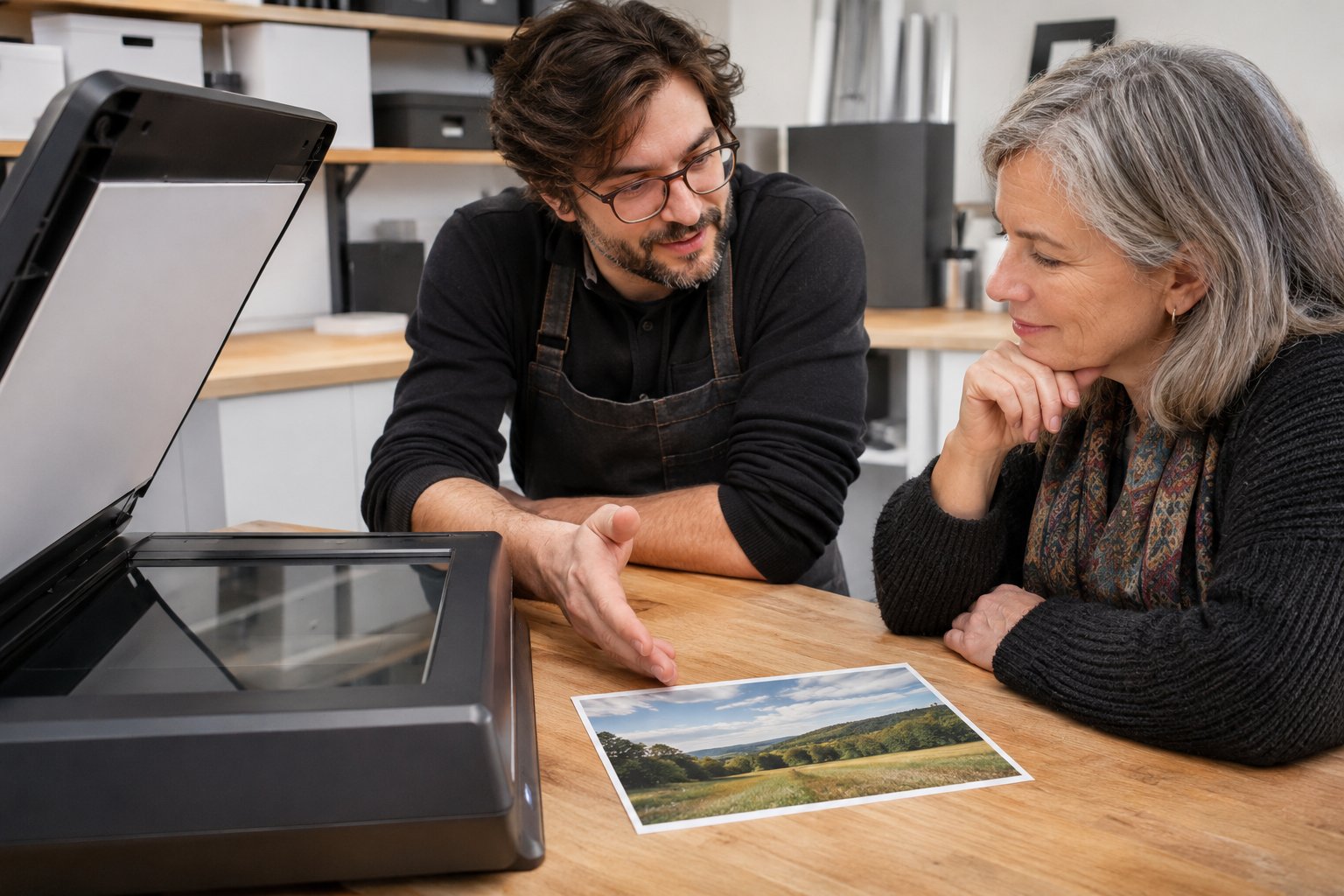
A Fargo example: capture and alteration need separate explanations
Fargo Photoworks’ services page lists film scanning and processing alongside digital retouching and restoration. Its information page identifies a Fargo location. Those published service categories provide a practical local context, not a finding that the business’s website is unclear or a claim it is a Guardian client.
For a business offering these kinds of work, customers should be able to distinguish obtaining a digital image from requesting changes to it. The actual provider decides what its scanning service includes and what alteration needs separate approval. A visitor should not have to infer that distinction from a dramatic before-and-after picture.
Build the brief around the desired output
Start with the existing service overview and ask the provider which customer intentions it supports. The SEO assignment can connect ordinary-language questions to the correct service explanation without promising that every source image can be restored.
- Explain the source material accepted. Use the business’s confirmed categories, not a stock photograph that implies it handles every medium.
- Describe the output. Clarify whether the discussion concerns a digital file, an altered digital image or a new print. Do not treat one as automatically including the others.
- Identify decisions about alteration. Explain when the customer and provider agree what should be corrected or retained. The business approves the actual workflow.
- Provide the right inquiry. Let a customer describe the intended use and concern in ordinary language, then direct them to the provider’s supported assessment process.
The content should not instruct people to upload irreplaceable or private material to an unapproved destination. A first inquiry can be a general description when that is enough to start. Any later file transfer or physical handover follows the business’s actual process, not a procedure invented by an SEO writer.
A fictional assignment: copying a family image is not permission to change it
Imagine a photo lab whose customer wants a digital copy of an older portrait, including the markings they consider part of its history. Another customer wants visible damage reduced for a display print. Both begin with the same phrase: “Can you scan this?”
A useful service-page improvement would explain the difference between obtaining the copy and discussing optional image changes. Link the scanning description to the relevant restoration information without making restoration sound mandatory. Preserve the provider’s accurate technical details, but put the customer’s decision before the terminology.
If the lab publishes an authorized before-and-after example, its caption should identify what was changed and what service it illustrates. Do not imply that the example shows an untouched scan, physical repair of the original or a result available for every damaged image. This is a fictional editorial brief, not a description of Fargo Photoworks’ practices or customers.
The deliverable may be a clearer overview, a maintained alteration explanation and a better link between them. A new upload system or image-processing integration is not a prerequisite. Assess any missing function separately from the ongoing SEO work.
Review the questions the revised page still leaves open
After approved changes are published, review available organic query and landing-page information alongside summarized customer questions. If people still assume that a scan includes extensive restoration, improve the connection between service scope and examples. If they understand the distinction but cannot find how to request assessment, improve that route.
When the provider changes its output options or approval process, update the affected descriptions together. Avoid creating near-identical pages for every informal phrase a customer might use. Several ways of asking for the same service can be answered naturally in one useful explanation.
Distinguish a new service inquiry from help downloading an existing order or requesting another copy. Record source attribution only when supported. A visit to a restoration example is not proof of an order, and successful delivery of a file is not proof that every requested alteration was possible.
Start with an explanation worth improving
Lauren Howie of InColor Design describes in Guardian’s published testimonials how the team organized her ideas into graphics and content suited to her business. This is a client-reported branding and website experience, not a Fargo photo-lab result or an assurance about search rankings.
Bring the current service page, approved examples and the distinctions your team regularly explains. Plan continuing organic SEO with Guardian around factual approvals, useful content, relevant links and the next evidence-based decision.
Questions about Fargo organic SEO
Should scanning and restoration have separate explanations?
Yes when they involve different decisions in the provider’s actual offer. Explain what the scan includes and what changes need assessment or approval. Separate explanations do not necessarily require separate pages.
Does requesting a digital copy imply permission to alter the image?
Do not assume that in website copy. Describe the provider’s actual approval process and distinguish copying from requested changes. Some customers may want markings retained; the business and customer settle the intended work.
What should an image-restoration example caption explain?
Identify the service and the changes shown, using approved project facts and publication permission. Do not present an altered result as an untouched scan, physical repair of the original or a guaranteed result for every source image.
Should the first inquiry require private photographs?
Only use the provider’s approved process. A general description may be enough to start. Any later file transfer or physical handover needs a suitable established route; SEO copy should not invent one.
Do different customer terms require separate landing pages?
Not automatically. Several phrases may describe the same intended service. Explain useful terminology in context and create another page only when it answers a materially different question with substantial approved information.
What should guide the next recurring SEO assignment?
Use available organic evidence and recurring questions to find the unresolved decision. Clarify included work, explain an output option or improve the assessment link as needed. Keep existing-order support separate from new service interest.
Does this engagement include restoration software or a new upload tool?
Guardian provides the agreed SEO and website-content work, not photo restoration. Any new tool or integration requires its own assessment and scope. Clearer service content can often use the existing website and inquiry process.
Discuss your next useful SEO assignment with Guardian. Bring the current page and the customer question it should answer. Explore North Dakota service areas and nationwide remote support.