
Imagine a homebuyer types “best realtor near me” on their phone, searching for a dream home in your city. Will they find you or your competition? In 2026, local seo for real estate is more important than ever, helping you show up where buyers and sellers are looking.
With 84% of people searching for local businesses online every day, you cannot afford to miss out. This guide walks you step by step through proven strategies to boost your results with local seo for real estate. Curious how to stand out? Keep reading to learn exactly what works now and for the future.
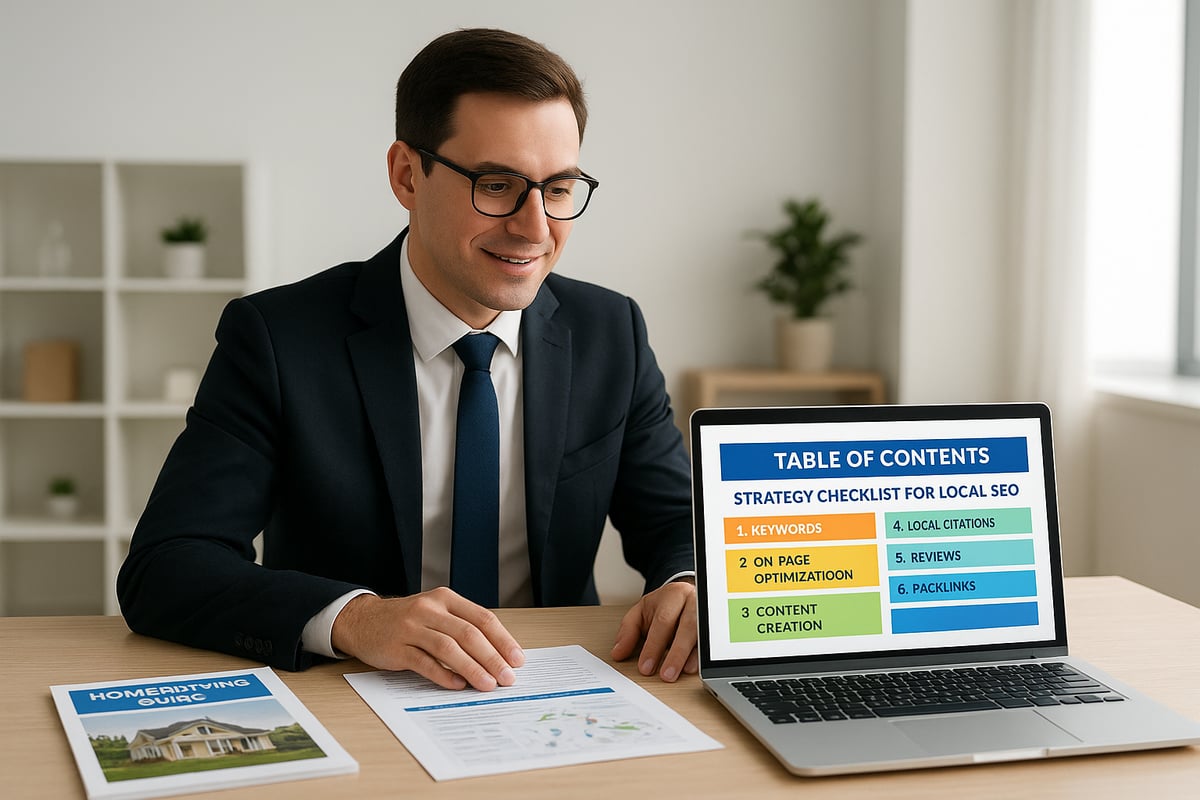
Table of Contents & Summary
When you want to master local seo for real estate, a clear roadmap is essential. Below, you’ll find a clickable table of contents and a quick summary of each section to help you navigate this guide with ease.
| Section | What You'll Learn |
|---|---|
| What is Local SEO for Real Estate? | Understand how local search works for agents, why it matters, and see real-world examples. |
| Step-by-Step Local SEO Strategy for Real Estate in 2026 | Get a proven, actionable plan for boosting local rankings and leads. |
| Advanced Local SEO Tactics for Real Estate in 2026 | Explore expert strategies like internal linking, backlinks, and mobile optimization. |
| Essential Tools and Resources for Local SEO Success | Discover the best tools and resources to streamline your local SEO efforts. |
| Future Trends: What’s Next for Local SEO in Real Estate? | Stay ahead with predictions on AI, voice search, and new Google features. |
Expect practical tips, real-life examples, and the latest local seo for real estate strategies you can use right now.
What is Local SEO for Real Estate?
When you want to attract more clients, local seo for real estate is where you should start. It is all about making sure your business shows up when people search for homes or agents in your city or neighborhood.

How does local SEO work for real estate?
Local seo for real estate helps you stand out in your local market. When someone types “homes for sale in Dallas” or “best realtor near me,” Google uses location data to show the most relevant businesses nearby.
You’ll notice real estate agents and agencies often appear in Google’s local pack and on Google Maps. These spots are prime digital real estate. Unlike traditional SEO, which targets broad topics, local seo for real estate focuses on location-based searches and high intent keywords.
Here’s a quick look at the differences:
| Feature | Local SEO for Real Estate | Traditional SEO |
|---|---|---|
| Target Audience | People in specific neighborhoods | National or global audience |
| Keywords | “homes for sale in Austin” | “how to buy a house” |
| Ranking Factors | Google Business Profile, NAP, reviews | Content depth, backlinks |
| Search Results | Google Maps, local pack | Organic listings |
Several factors influence your local rankings. The most important are your Google Business Profile, NAP (name, address, phone) consistency, online reviews, and local citations. Every detail matters. According to recent data, 84% of consumers search for local businesses online every day.
If your listings are accurate and your reviews are strong, you have a much higher chance of being seen. Local citations, like directories and industry sites, also boost your visibility. This is why local seo for real estate is so powerful.
Why is local SEO critical for real estate agents in 2026?
Now, let’s talk about why you cannot ignore local seo for real estate in today’s market. Local searchers are ready to act. When someone searches for a real estate agent near them, they are likely looking to buy or sell soon.
Trust is also built with good reviews and consistent business details. When people see your business has many positive reviews, they are more likely to call you instead of a competitor.
Mobile and voice search are growing fast. Did you know that 69% of homebuyers use a phone or tablet to search for homes? Plus, 70% of real estate website traffic originates from local search. This means your local SEO efforts can quickly pay off and bring you more leads.
Agents who show up in Google’s local pack get more calls and visits. Local SEO delivers results faster than national SEO because you’re targeting people who are already nearby and interested. When you optimize for local seo for real estate, you set yourself up for more visibility, more trust, and more clients.
Step-by-Step Local SEO Strategy for Real Estate in 2026
When it comes to local seo for real estate, having a clear, step-by-step strategy is the difference between getting found and getting forgotten. Let’s walk through the practical steps you need to boost your visibility, attract leads, and stay ahead in 2026.
Step 1: Audit Your Website and Analyze Competitors
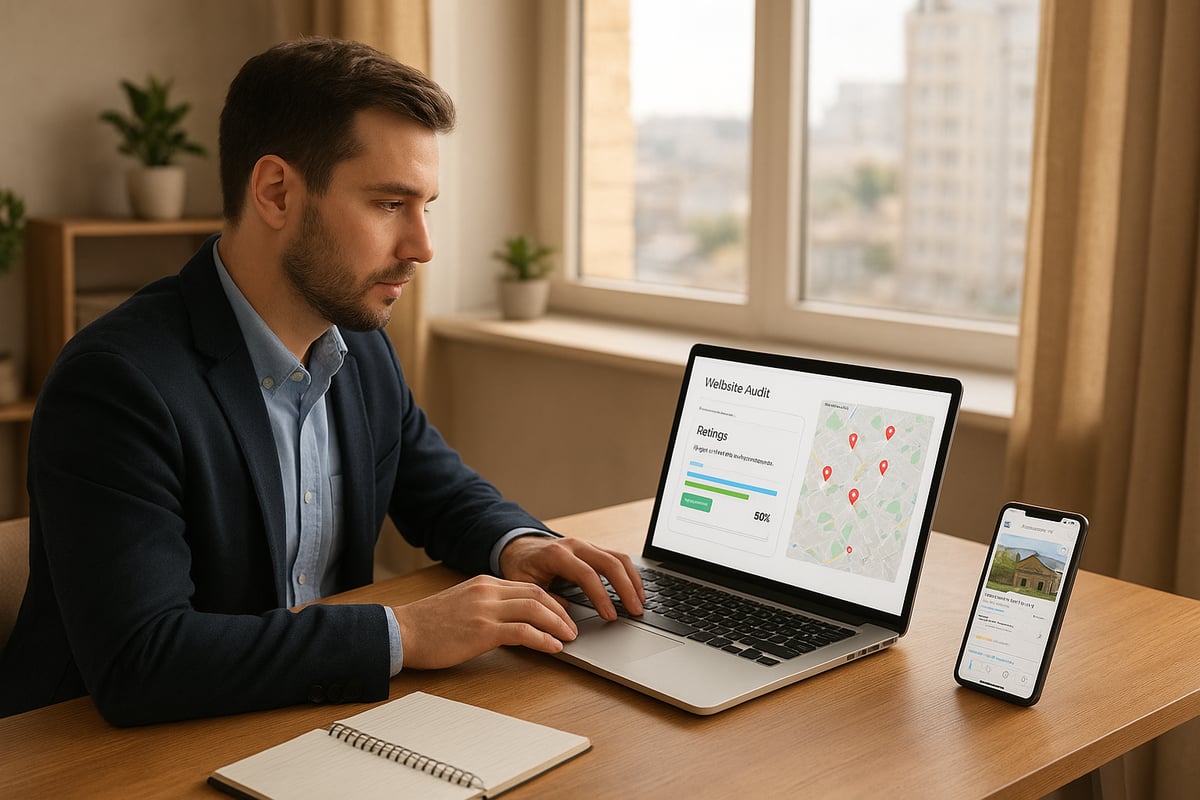
First, you need to know where you stand. An audit is the foundation for improving local seo for real estate. Start by checking these essentials:
- Site structure: Is your navigation simple and clear?
- Page speed: Does your site load in under 3 seconds?
- Mobile-friendliness: Is your site easy to use on phones and tablets?
- Meta tags: Do your pages have unique titles and descriptions with local keywords?
- User experience: Can visitors find what they need quickly?
Use tools like Google Analytics and Search Console to spot issues. Free SEO audit tools can also help. One helpful resource is the Free SEO Audit Report which gives you a detailed snapshot of your strengths and weaknesses.
Next, look at your top competitors. Search “homes for sale in [your city]” and note who ranks high. Compare your site to theirs. Are they using better images? Do they have more calls-to-action? Are their pages faster?
Quick wins often include fixing broken links, improving call-to-action buttons, and updating old content. Make a checklist and tackle the easy fixes first. This sets a strong base for your local seo for real estate strategy.
Step 2: Keyword Research—How to Find High-Intent Local Keywords
Now, let’s talk about keywords. For local seo for real estate, focus on specific, long-tail phrases. These are detailed searches that buyers and sellers are actually typing in. Examples include “3-bedroom house in North Burbank” or “condos for sale near Downtown Dallas.”
Did you know long-tail keywords drive 70% of real estate traffic? They may get fewer searches, but they bring in serious, ready-to-act clients.
Here’s how to find the best keywords:
- Use Google’s related searches at the bottom of search results.
- Try Keyword Planner, Keywords Everywhere, and SpyFu.
- Look at what your competitors are targeting.
Make a list of possible keywords, then sort them by intent and search volume. Focus on phrases that mention neighborhoods, property types, and features.
Even low-volume keywords can add up to big traffic. By stacking lots of these, your local seo for real estate efforts become much more powerful.
Step 3: Optimize Your Website for Local Rankings
After keyword research, it’s time to optimize your site. This step is key for local seo for real estate. Start by adding your city or neighborhood name in titles, headings, and page content.
Always display your business name, address, and phone number (NAP) on every page. This builds trust with both Google and your visitors.
Embed a Google Map on your contact page and main location pages. Use LocalBusiness schema markup to help search engines understand your business. This is a simple code you can add:
{
  "@context": "https://schema.org",
  "@type": "RealEstateAgent",
  "name": "Your Realty Company",
  "address": {
    "@type": "PostalAddress",
    "streetAddress": "123 Main St",
    "addressLocality": "Your City",
    "addressRegion": "ST",
    "postalCode": "12345"
  },
  "telephone": "+1-555-555-5555"
}
If you serve multiple neighborhoods, create a separate page for each. Make sure each page has unique content—don’t copy and paste. Highlight what makes each area special.
Optimizing your site like this makes local seo for real estate work smarter, not harder.
Step 4: Create Localized Content That Converts
Content is the heart of local seo for real estate. Localized content means writing about topics that matter to your community. Think about:
- Neighborhood guides: Best places to eat, shop, or relax
- Market updates: Monthly or quarterly trends
- Local news: Events, festivals, or new developments
- FAQs: Real questions from buyers and sellers
Mix up your formats. Blog posts, infographics, videos, and virtual tours all help. Use tools like BuzzSumo to see what local topics are popular.
Answering common questions builds trust and positions you as the go-to expert. For example, a blog series on “Best Schools in [Neighborhood]” or “Monthly Market Updates for [City]” gives you a steady stream of local seo for real estate content.
The more helpful you are, the more Google (and your community) will notice.
Step 5: Optimize Your Google Business Profile (GBP)
Your Google Business Profile is your online storefront. It’s critical for local seo for real estate. Here’s how to make yours shine:
- Claim and verify your listing
- Fill out every detail: name, address, phone, website, hours
- Pick the right business categories
- Add high-quality photos and videos
- Post updates weekly with Google Posts
Encourage happy clients to leave reviews. Reply to all reviews, positive or negative. This shows you care and builds trust.
A complete, active Google Business Profile helps you appear in the local pack and Google Maps. This is where most homebuyers and sellers start. By keeping your profile updated, you boost your local seo for real estate visibility every day.
Step 6: Build and Manage Local Citations & NAP Consistency
Citations are mentions of your business on other sites, like directories. For local seo for real estate, citations prove you’re a real, trusted business.
Top sites for real estate citations include:
- Zillow
- Realtor.com
- Yelp
- Trulia
- Homes.com
Make sure your NAP (name, address, phone) is 100% identical everywhere. Even small differences can confuse search engines.
Here’s a simple checklist:
| Directory | Name Match | Address Match | Phone Match | Status |
|---|---|---|---|---|
| Zillow | Yes/No | Yes/No | Yes/No | Fixed/Needs Update |
| Realtor.com | Yes/No | Yes/No | Yes/No | Fixed/Needs Update |
| Yelp | Yes/No | Yes/No | Yes/No | Fixed/Needs Update |
Audit your citations every quarter. Update any errors right away. Consistent NAP across every platform is a must for strong local seo for real estate.
Step 7: Encourage and Manage Reviews for Maximum Impact
Reviews are the secret sauce for local seo for real estate. They boost your rankings and make new clients trust you faster.
Almost a third of consumers always read reviews, and even more do so regularly. Ask every happy client to leave a review on Google and top directories.
Here are some tips:
- Send a thank-you email with a direct link to your review page
- Follow up with a gentle reminder if needed
- Respond to every review, both good and bad
Don’t be afraid of the occasional negative review. Respond kindly and professionally. This shows you care about your clients.
One agent I know doubled their inquiries just by improving their Google review profile. When your reviews shine, your local seo for real estate will, too.
Advanced Local SEO Tactics for Real Estate in 2026
When you want to stand out with local seo for real estate, basic steps will only take you so far. To really dominate your local market in 2026, you need advanced strategies that go beyond the basics. Let’s walk through the most effective tactics you can use to build authority, capture more leads, and stay ahead of your competition.

How can you leverage internal linking and backlinks for local authority?
Internal linking is a powerful tool for local seo for real estate. By connecting your neighborhood pages, blog posts, and service pages, you guide visitors through your site and help search engines understand your structure. This boosts both user experience and your rankings.
Think about linking your “Homes for Sale in [Neighborhood]” page to your “Best Schools in [Neighborhood]” blog post. This keeps visitors engaged and signals to Google that your site is an authority on local topics.
Backlinks from trusted local sources are just as important. Reach out to local newspapers, business partners, or community organizations for guest posts or sponsorships. A single backlink from a local news site’s real estate section can give your website a serious credibility boost.
Here’s a quick comparison of internal links and local backlinks:
| Tactic | What It Does | Example |
|---|---|---|
| Internal Linking | Guides users, strengthens site structure | Blog links to neighborhood pages |
| Local Backlinks | Builds authority, increases local trust | Article in local online magazine |
Remember, 76% of real estate searches include location-specific terms. Linking your pages with these terms and earning local backlinks can make your site the top choice for buyers and sellers.
How do you optimize for mobile and voice search?
With more people using phones to search, mobile optimization is no longer optional for local seo for real estate. Your website must look great and load fast on any device. Responsive design adjusts your site to fit screens of all sizes, while compressed images and clean code help pages load quickly.
Voice search is growing, especially for homebuyers on the go. People ask, “Find a realtor near me” or “Show homes for sale in [city].” To capture these searches, use natural language and question-based keywords in your content.
Here’s what you should focus on:
- Make sure your site is mobile-friendly using Google’s Mobile-Friendly Test.
- Use conversational keywords and questions that match how people speak.
- Keep important info, like your phone number and address, easy to find.
For example, a site that ranks for both “homes for sale near me” and “Who is the best realtor in [city]?” will reach more clients, no matter how they search.
What technical SEO fixes boost local rankings?
Technical SEO is the backbone of local seo for real estate. Without a solid technical foundation, even the best content can struggle to rank.
Start with the basics:
- Secure your site with SSL (HTTPS).
- Use short, clean URLs that include your city or neighborhood.
- Optimize all images with descriptive alt text and small file sizes.
- Create and submit an XML sitemap to Google.
Schema markup is a game changer. Adding LocalBusiness and RealEstateAgent schema helps Google understand your business, location, and services. Use tools like Schema.org or Google’s Structured Data Markup Helper to add this code.
For a quick technical audit, tools like Screaming Frog and SEMrush can spot errors that hurt rankings. Fixing broken links, duplicate content, or slow loading times can lift your site in search results.
Here is a sample code block for adding LocalBusiness schema:
{
  "@context": "https://schema.org",
  "@type": "LocalBusiness",
  "name": "Your Real Estate Agency",
  "address": {
    "@type": "PostalAddress",
    "streetAddress": "123 Main St",
    "addressLocality": "Your City",
    "addressRegion": "ST",
    "postalCode": "12345"
  },
  "telephone": "(123) 456-7890"
}
A site that fixed technical errors and added schema often sees a jump in local rankings within weeks.
How can you use social media to boost local SEO for real estate?
Social media is another channel where local seo for real estate can shine. Your business profiles on Facebook, Instagram, LinkedIn, and YouTube often show up in local search results.
First, complete every profile with your business name, address, and phone number. Use the same info everywhere for consistency. Next, share local content—think market updates, neighborhood events, and client success stories. This helps you connect with your community and builds trust.
Join and engage with local groups on Facebook or Nextdoor. Answer questions, share tips, and showcase your expertise. When people share your posts or tag your business, it sends positive signals to search engines.
For example, a real estate agent who shares a video tour of a local home in a community group might see a spike in website visits and new leads.
In 2026, combining these advanced tactics with a strong foundation will set you apart. If you want to get the most from local seo for real estate, mastering internal linking, local backlinks, mobile optimization, technical SEO, and social media is the way to stay ahead.
Essential Tools and Resources for Local SEO Success
When it comes to local seo for real estate, the right tools make all the difference. Without them, you could miss out on valuable leads in your city. Let’s look at what you need to build a strong local presence.
Must-Have Tools for Local SEO
Start with these essential categories to cover every part of your local seo for real estate strategy:
| Tool Type | Examples | Purpose |
|---|---|---|
| Analytics | Google Analytics, Search Console | Track traffic, monitor site performance |
| GBP Management | Google Business Profile Manager | Boost visibility, manage business details |
| Citation Tools | Moz Local, BrightLocal | Ensure NAP consistency, audit citations |
| Keyword Research | Google Keyword Planner, Keywords Everywhere, SpyFu | Discover high-intent local keywords |
| Content & Reviews | BuzzSumo, Hootsuite, ReviewTrackers | Find content ideas, manage social/reviews |
| Technical Tools | Schema markup generators, mobile testers | Validate schema, check mobile usability |
Checklist for Ongoing Monitoring
Keep your local seo for real estate on track with this simple checklist:
- Track keyword rankings weekly.
- Review Google Business Profile monthly.
- Audit NAP consistency each quarter.
- Monitor reviews and reply quickly.
- Refresh localized content each season.
- Test website speed and mobile usability.
Example in Action
Let’s say you use Moz Local to track your citations. You spot a wrong phone number on a directory, update it, and soon see your Google ranking improve. Or, you use the Google My Business SEO Guide to fully optimize your GBP, helping you show up more often in local searches.
Takeaway
If you want to win in local seo for real estate, these tools and resources are your secret weapon. Use them consistently, and you’ll see more leads, better rankings, and a stronger local brand.
Future Trends: What’s Next for Local SEO in Real Estate?
When you think about local seo for real estate in 2026, it is clear things are changing fast. Artificial intelligence and machine learning are starting to shape how buyers find homes and how agents get noticed.
Soon, you might see search engines showing results based on your habits in real time. Hyperlocal content will matter even more. Imagine a page about a single street or a video tour of one block. These details help you stand out and connect with people looking for homes right in your area.
Personalization is another big trend. Search engines are learning what buyers want, so your listings and posts should match what locals are searching for. Voice search is also growing. More people are asking their phones for help finding a realtor near them, so make sure your content sounds natural and answers real questions.
Video content is taking off. Short clips showing homes, neighborhoods, or quick tips are more popular than ever. Real-time updates, like market changes or open house alerts, keep your site fresh and useful.
It is important to keep up with Google’s updates and new features. Tools like AI-driven chatbots are helping agents respond faster and build trust. Staying ahead of these trends gives you a big edge. Did you know that 53% of real estate website traffic comes from organic search? This shows how vital it is to keep your local seo for real estate strategy up to date.
So, after diving into all these local SEO strategies and future trends, are you ready to actually see your real estate business stand out online in 2026? I know the process can feel overwhelming, but with the right support, you don’t have to tackle it alone. Imagine having a team that truly gets your goals and crafts a step by step plan just for you—that’s what Guardian Solutions LLC is all about. If you’re serious about boosting your online visibility and capturing more leads, why not take the next step? Let's Work Together! Contact Us Today...