
Web design best practices are changing fast, and 2026 will be no exception. If you want your website to stand out, you need to focus on what users expect and what drives real business growth.
Today, smart web design goes beyond good looks. It shapes how visitors feel and how likely they are to take action. A great site builds trust, keeps people engaged, and turns clicks into customers.
In this article, I will share 11 actionable web design best practices that work in 2026. You’ll learn how to boost user experience, improve site speed, and make your brand shine. Ready to elevate your site? Let’s dive in.
Table of Contents
The table below outlines every section covered in this guide on web design best practices for 2026. Use it to jump to the tips and strategies that matter most for your website.
| Section | Description |
|---|---|
| Introduction | Why web design best practices matter now more than ever |
| Summary | Key takeaways and benefits of following best practices |
| Why Are Web Design Best Practices Essential in 2026? | Explore trends, technology shifts, and the business case |
| 11 Web Design Best Practices to Elevate Your Site in 2026 | Actionable tips for a standout website |
| 1. User-Centric Design | Focus on user needs and feedback |
| 2. Mobile-First and Responsive Design | Prioritize mobile experience |
| 3. Accessibility for All Users | Make your site usable for everyone |
| 4. Fast Loading Speeds | Optimize performance and speed |
| 5. Intuitive Navigation | Help users find what they need easily |
| 6. Consistent Branding and Visual Hierarchy | Create a trustworthy, recognizable site |
| 7. Strategic Use of CTAs | Guide users toward action |
| 8. Engaging Visuals and Media | Use images and videos for clarity and appeal |
| 9. Storytelling Through Design | Connect emotionally through design choices |
| 10. SEO-Optimized Structure | Boost search visibility and structure |
| 11. Continuous Testing and Improvement | Keep refining your site |
| Summary | Final thoughts and encouragement to act |
Curious how these web design best practices look in action? Visit our Web design services overview for real examples and expert support.

Summary
Adopting web design best practices is essential if you want your website to stand out in 2026. These strategies help you build sites that are fast, easy to use, and welcoming to everyone.
By focusing on user needs, mobile experience, and accessibility, you set your site up for better engagement and higher conversions. If you want to avoid common errors, check out Are you making website mistakes? for practical tips.
When you follow web design best practices, you make sure your website stays ahead of the competition and delivers a user-friendly experience.
Why Are Web Design Best Practices Essential in 2026?
Staying ahead with web design best practices is more important than ever in 2026. As technology keeps changing, your site must keep up to meet visitors’ expectations. If you want to build trust and grow your business, you need to know why these practices matter.

The Evolving Digital Landscape
Let’s face it, the digital world is moving fast. People expect websites to load quickly and look great on any device. Did you know that over 58% of web traffic now comes from mobile devices? This means your site should shine on phones and tablets.
AI and voice search are also changing how users interact with sites. Accessibility is not just a nice-to-have anymore, it’s a must. If your site is not easy for everyone to use, you risk losing visitors.
First impressions count. When someone lands on your site, design shapes their trust in seconds. If a site looks outdated or is hard to use, people leave fast. High bounce rates and lost revenue often follow poor design choices.
The Business Case for Modern Web Design
Why should you care about web design best practices from a business point of view? Your site is often the first thing customers see. Strong design builds credibility and keeps visitors engaged. It can make a huge difference in how people view your brand.
Speed is a big deal. Google found that if your site load time jumps from one to three seconds, bounce rates can increase by 32%. That’s a lot of lost opportunities. So, following SEO optimization for websites as part of your web design best practices helps your site perform better in search results and keeps users happy.
Design standards change quickly. What worked two years ago might not work today. Many businesses see growth after updating their websites to match current trends and needs. Investing in design is investing in your future.
Key Challenges for 2026
Now, what challenges are you likely to face? There are more devices than ever, from smartwatches to large monitors. Your site needs to look great everywhere. Accessibility is another hurdle, making sure all users, no matter their abilities, can enjoy your content.
Fast load times are essential, but so is having engaging content. Balancing these can be tricky. Continuous improvement is key. Listening to feedback and testing new ideas helps you stay ahead.
Web design best practices help solve these challenges. By following them, you make your website competitive, user-friendly, and ready for whatever the future brings.
11 Web Design Best Practices to Elevate Your Site in 2026
Ready to boost your website’s results? In 2026, following web design best practices is more important than ever. Let’s break down 11 proven strategies that can help you stand out, keep visitors happy, and grow your business.

1. User-Centric Design
Why does user-centric design matter so much? It all starts with your visitors. When you use web design best practices, you put their needs and goals first. That means doing research, building buyer personas, and shaping your site around real people.
Try adding feedback loops, like surveys or quick polls. These help you see what is working and what needs improvement. Usability testing lets you spot pain points before they turn into lost conversions.
Working together is key. When your design, UX, content, and marketing teams talk, your site feels smoother. For example, look at Mailchimp’s homepage. It guides users step by step, making it easy to get started.
Tools like session replays and on-page surveys can show you how real users interact with your site. Want to see how these ideas work in action? Check out our website portfolio and examples to find real-world success stories.
When you use web design best practices focused on users, you’ll see more engagement, satisfaction, and sales.
2. Mobile-First and Responsive Design
Have you ever noticed how most people browse on their phones? In fact, over 58% of website traffic is mobile. That’s why web design best practices mean starting with mobile in mind.
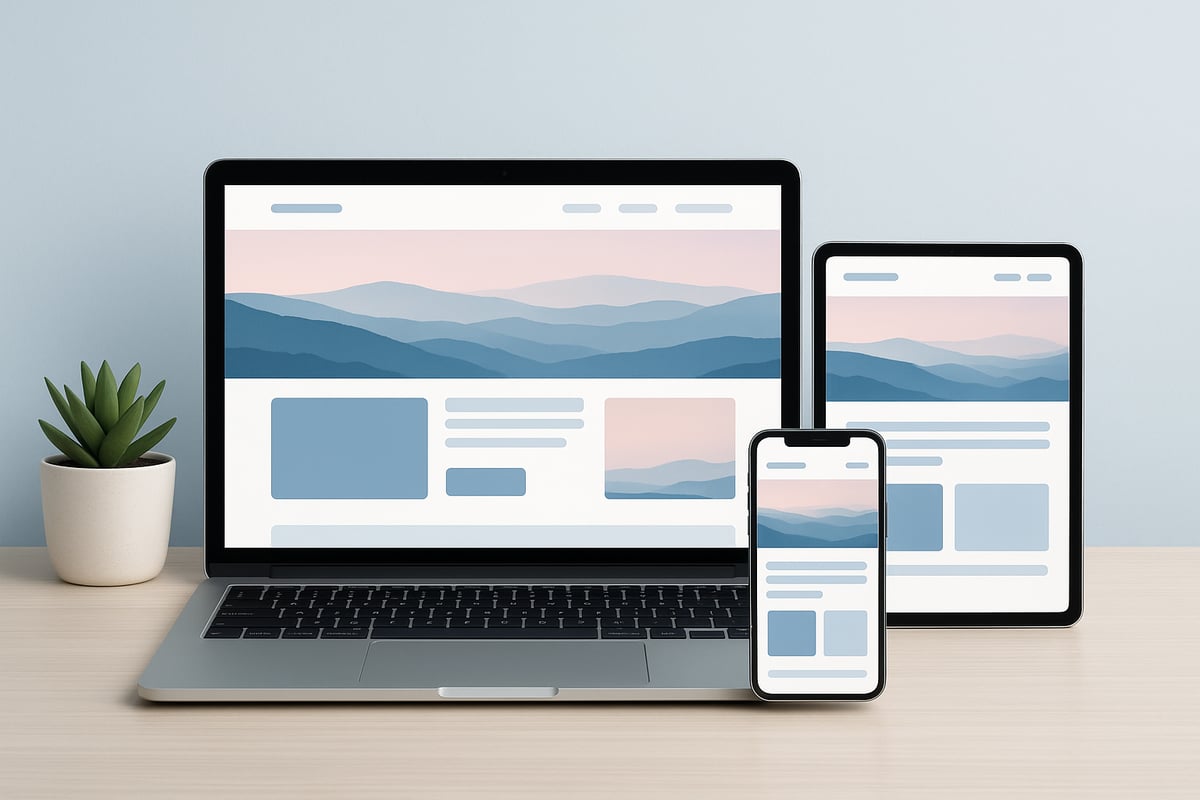
Begin by making layouts that fit any screen size. Use flexible grids, scalable images, and test your navigation on phones and tablets. Responsive design lets your site look great everywhere, from tiny screens to big monitors.
Make sure buttons are easy to tap, and text is clear to read. Test your site on different devices and browsers to catch issues early.
A mobile-friendly site is not just good for users. Google rewards you with better search rankings. When you use web design best practices like these, you make your site easier to use and find.
3. Accessibility for All Users
Is your website easy for everyone to use? Web design best practices in 2026 put accessibility front and center. That means designing for people with all types of disabilities, including visual, motor, auditory, and cognitive challenges.
Use strong color contrast (at least 4.5:1 for text) so words are easy to see. Make sure your site works with screen readers and can be navigated with a keyboard. Add descriptive alt text to every image.
Did you know less than 5% of websites are fully accessible? That’s a huge missed opportunity. By following web design best practices, you can welcome more visitors and meet legal standards.
Accessible sites reach a wider audience and show that you care about every user.
4. Fast Loading Speeds
Do you ever leave a website because it’s too slow? You’re not alone. Web design best practices say speed is key. Even a delay of 1 to 3 seconds can increase bounce rates by 32%.
Start by shrinking images and only loading what you need. Use tools like Google PageSpeed Insights to check your site’s performance. Avoid heavy frameworks and too many plugins that slow things down.
Try lazy loading and caching to make your pages pop up faster. When you use web design best practices for speed, your users stay longer, and search engines reward you.
A fast site means happy visitors and better rankings.
5. Intuitive Navigation
Ever get lost on a website? Good navigation is a must. Web design best practices call for clear menus and a logical structure.
Use standard labels like “About,” “Services,” and “Contact.” For bigger sites, breadcrumbs help users see where they are. Add a search bar and a detailed footer for quick access to important pages.
Test your navigation on both desktop and mobile. Sites like Sephora use breadcrumbs and clean layouts to keep things simple.
When you follow web design best practices for navigation, visitors find what they need faster and are more likely to convert.
6. Consistent Branding and Visual Hierarchy
Want your business to be memorable? Web design best practices say branding must be consistent. Use the same logo, colors, fonts, and icons everywhere.
Keep your brand voice steady across all pages. Organize your content so the most important parts stand out. Use white space to make things easy to read and focus attention.
Netflix is a great example. Their branding is always clear, and their calls-to-action stand out.
By using web design best practices for branding and hierarchy, you build trust and recognition with your audience.
7. Strategic Use of CTAs
How do you get visitors to take action? With clear calls-to-action (CTAs). Place your CTAs where people can see them, like at the top or after key sections.
Use bold colors and words that tell users what to do. If people worry about commitment, address that near your CTA, like adding “Cancel anytime.”
Test different placements using heatmaps and analytics to see what works best. Netflix’s homepage CTA is a perfect example of driving users to act fast.
Web design best practices in CTA strategy lead to more conversions and a smoother user journey.
8. Engaging Visuals and Media
Do your images and videos grab attention? Web design best practices encourage using high-quality visuals to break up text and explain ideas.
Use photos, videos, or illustrations that match your message. For tech or SaaS sites, include product screenshots to show features in action.
Balance is important. Too many visuals can slow your site, so optimize images for quick loading. Tech websites often use product images to help users understand their offerings.
When you use web design best practices for visuals, your site becomes more engaging and easier to understand.
9. Storytelling Through Design
What makes a website memorable? Storytelling. Use web design best practices to connect emotionally with your users.
Start with a story before sharing facts or stats. Guide visitors through your brand journey. Share customer experiences or your company’s origin.
Tiller Digital’s website is a good example. Their design tells a story that guides users from start to finish.
Storytelling in web design builds connection and helps your business stand out.
10. SEO-Optimized Structure
How do people find your site? Search engines. Web design best practices include making your site easy for both users and search engines to understand.
Use descriptive H1 and header tags with natural keywords. Optimize your title tags, meta descriptions, and URLs. Structure your content for voice and long-tail searches.
Link pages internally and externally to build authority. Responsive design also helps your SEO. For more on how design impacts engagement, see Impact of Web Design on User Engagement.
With web design best practices for SEO, you get more organic traffic and higher visibility.
11. Continuous Testing and Improvement
How do you keep your site ahead of the competition? Never stop improving. Web design best practices are all about ongoing testing and updates.
Use analytics, heatmaps, and user feedback to spot issues. Run A/B tests on layouts, CTAs, and content. Keep an eye on speed, accessibility, and conversions.
Session replays show you exactly where users struggle. Make changes based on real data, not guesses.
Continuous improvement keeps your website user-focused and competitive. With web design best practices, you’re always moving forward.
Summary
Adopting web design best practices in 2026 is key to staying ahead. When you focus on user needs, accessibility, speed, and storytelling, your website becomes more engaging and effective. These techniques help boost site performance, improve user experience, and drive more conversions. For more on the latest trends, check out Web Design Trends for Enhanced User Experience. By following web design best practices, you keep your site competitive and user-friendly for every visitor.
So, after diving into these 11 web design best practices, you might be wondering—how do you actually start putting them into action for your own site? Maybe you’ve tried tweaking things before, but it still doesn’t feel quite right, or you just want a friendly expert to help you connect all the dots. That’s where we come in! At Guardian Solutions LLC, we’re passionate about helping businesses like yours stand out online, boost your visibility, and create a site your customers will love. Ready to chat about your website goals? Let's Work Together! Contact Us Today...