
Tech, Explained · Search & visibility
Transactional vs. Informational Keywords: Is the Searcher Learning or Ready to Act?
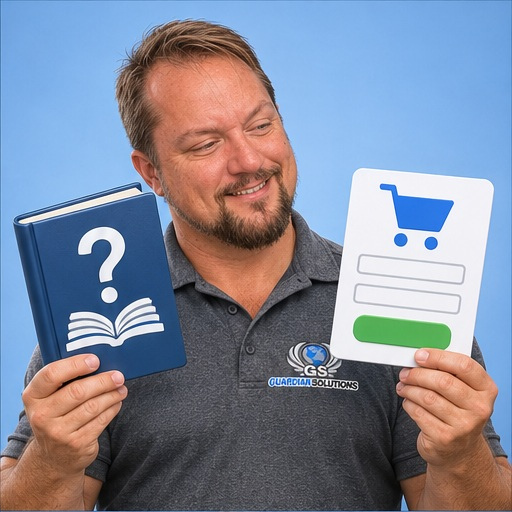
Two people search for the same service. One wants to understand it. The other wants someone to do it this week. Sending both to exactly the same kind of page can miss what each person needs.
The short answer
Informational keywords are search phrases used to learn something. Transactional keywords indicate an intention to take an action, such as booking, buying or signing up. These are intent categories, not guarantees about a person's mind. A query can be ambiguous, and search tools classify it using signals rather than interviewing the searcher. Commercial investigation, such as comparing providers, is another important stage between learning and acting.
What this means in everyday life
Compare 'what is local SEO' with 'request local SEO proposal.' The first needs a clear explanation. The second needs relevant services, credible support and a straightforward way to make an inquiry. Neither phrase automatically produces revenue. An educational article can introduce a future buyer, while a transactional visit can still fail if the page is vague or the contact form is difficult.
Where the misunderstanding causes trouble
Do not decide intent from one word alone. 'Best' often signals comparison, but the surrounding phrase and the actual search results matter. Nor should every informational article be turned into a sales pitch. If a visitor came for a definition, answer it promptly. A relevant service link can be useful after the explanation without interrupting the reason they arrived.
A practical business example
Here is a hypothetical example. A furniture retailer searches 'what is ecommerce SEO' while trying to understand weak online sales. Later, the owner compares agencies and requests proposals. A helpful definition page can connect naturally to a relevant service page, which in turn explains the work and the next step. The business does not need three identical pages competing for the same phrase; it needs distinct pages that support distinct questions.
What to ask before deciding
When reviewing a content plan, ask what the reader should understand or be able to do after each page. This prevents a large article library from becoming disconnected from the services the company actually sells. Use contextual links where they help the next decision, and measure inquiries rather than assuming every increase in educational traffic represents buying interest.
One useful next step
Choose one important service and list the questions people ask before they hire you. Separate basic definitions, comparisons, practical evaluation questions and direct requests for help. Match each group to an appropriate page. Then inspect the search results for the query you intend to target so the planned format is not based on a label alone.
The takeaway
Intent describes the job behind a search. Build a page that does that job well, then offer an appropriate next step instead of forcing every visitor through the same sales conversation.
Search intent explains why a visitor arrived; a landing page should then make the next appropriate action easy instead of answering a different question.
Questions you might still have
Are transactional keywords always more valuable?
They can be closer to an immediate action, but value depends on relevance, competition, conversion quality and what the customer is worth to the business. A narrow question from your ideal buyer can be more useful than a broad transactional phrase attracting the wrong audience.
Can one article target more than one phrase?
Yes, when the phrases share a meaningful intent. Related questions can belong on one strong page rather than being split into near-duplicate articles.
Is a predictive search phrase a special Google category?
No. In content planning it usually means an anticipated question or likely query. Validate the wording and intent with available search evidence rather than treating a prediction as measured demand.
Source: Source explanation from semrush.com.
Put the explanation to work
If this raises a question about your own website or marketing, explore Guardian Solutions’ organic search visibility services or tell us what you want to improve.